Things to Do in Huangshan: The Ultimate 1-Day & 2-Day Itinerary
Huangshan is located in Anhui Province, China, about 400 km from Shanghai. It’s easily accessible by high-speed train, taking only around 2.5 hours. In China, Huangshan holds a cultural status similar to Mount Fuji in Japan—it’s seen as a “must-visit” destination and is often considered even more iconic than Zhangjiajie.
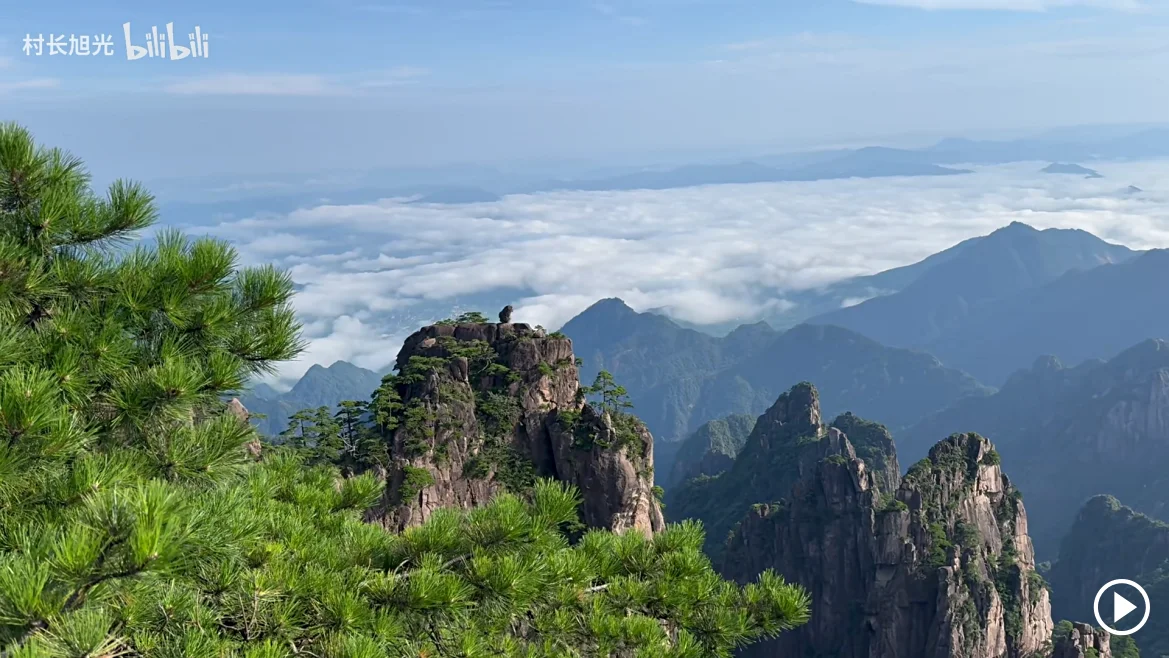
Huangshan is famous for its uniquely shaped pine trees, dramatic rock formations, “seas of clouds,” and stunning sunrises. The landscape looks like a traditional Chinese ink painting come to life, offering a completely different feel from the otherworldly scenery of Zhangjiajie. That’s why it’s well worth including both in your itinerary—they offer two unique experiences rather than repeating the same views.
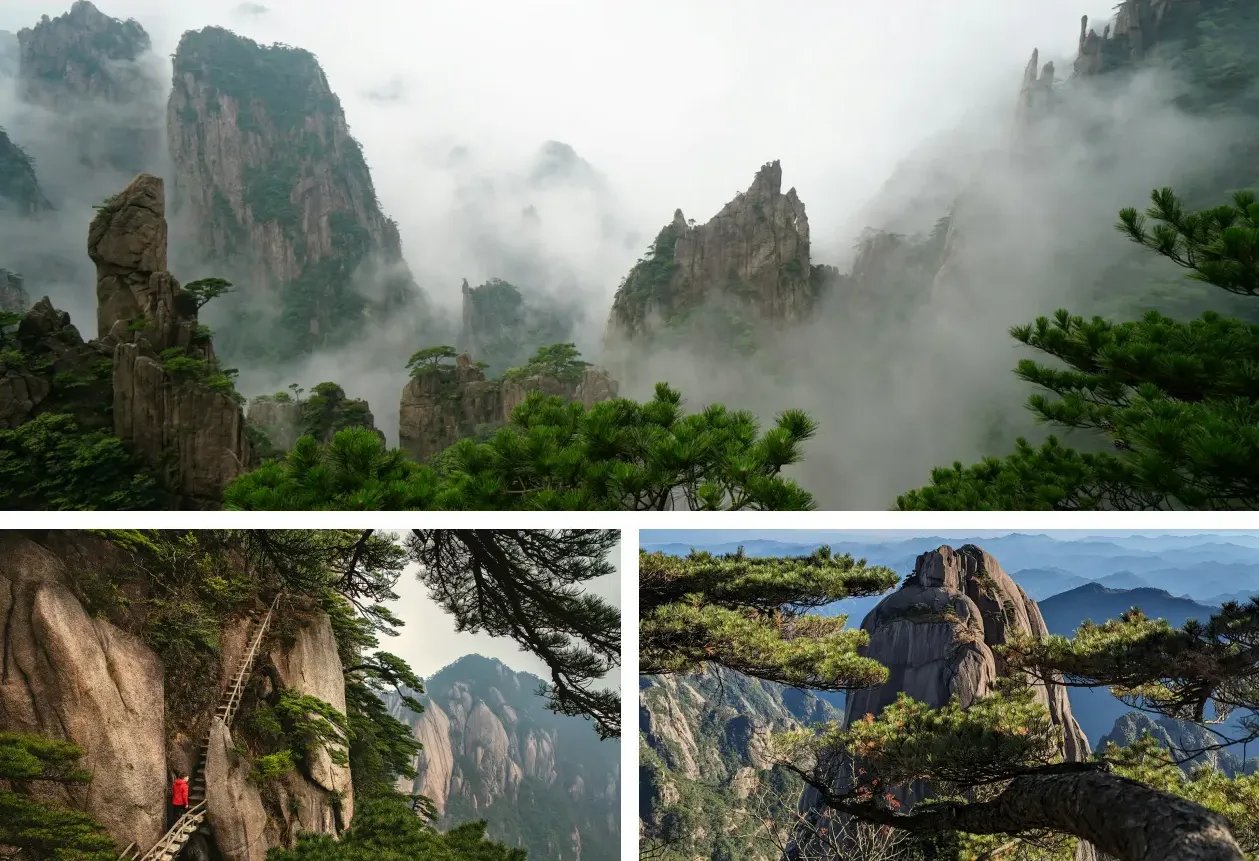 by Uniq Trek | Joshua Earle | David Magalhães
How to Get to Huangshan
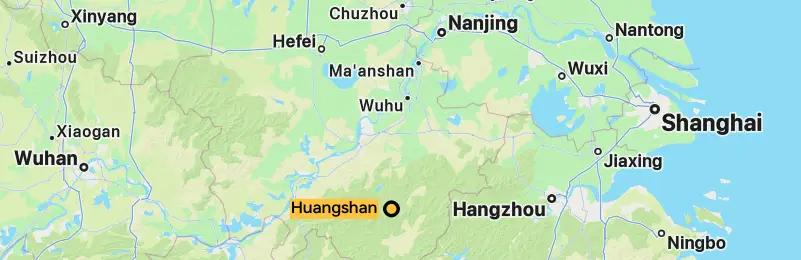
Where is Huangshan & which station to choose
Huangshan is located in Anhui Province, in eastern China.
If you’re traveling from major cities like Shanghai or Hangzhou, the best and most convenient arrival point is Huangshan North Railway Station (Huangshan Bei 黄山北站).
From Shanghai
- Departing from: Shanghai Hongqiao Station (most frequent 上海虹桥) or Shanghai South Station (上海南站).
- Travel time & price: 2.5–3 hours; ~230 RMB for 2nd class, ~350 RMB for 1st class.
- Frequency: Over 60 trains per day. It’s recommended to book at least 3 days in advance via Trip.com or other ticketing platforms.
From Hangzhou
- Departing from: Hangzhou East (closer to city center 杭州东站) or Hangzhou West (杭州西站).
- Travel time & price: 1.5–2 hours; ~120 RMB for 2nd class, ~200 RMB for 1st class.
- Frequency: About 60 trains per day. It’s recommended to book at least 3 days in advance via Trip.com or other ticketing platforms.
Main Entrance to Huangshan (Important)
Most visitors access Huangshan via the Huangshan Scenic Area South Gate Transfer Center (黄山风景区南大门换乘中心), located in Tangkou Town (汤口镇) at the foot of the mountain. This is the primary entrance to the scenic area and where all official shuttle buses to the mountain depart.
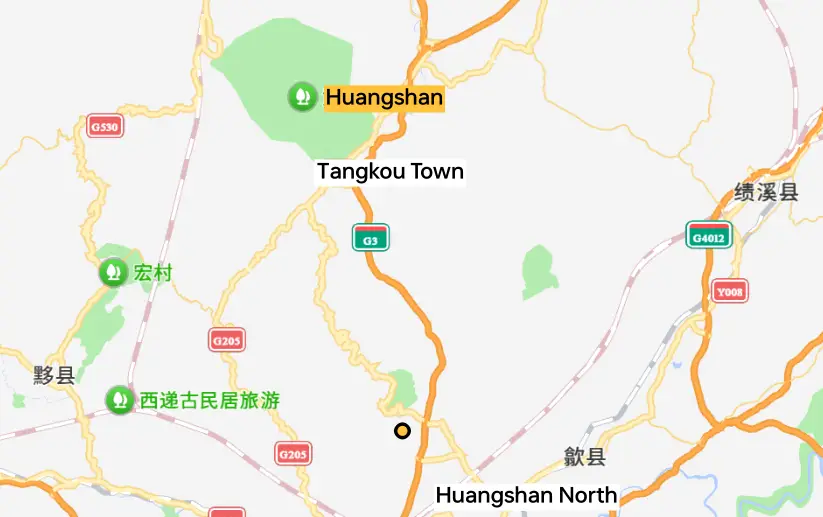
Getting from Huangshan North Station → Tangkou Town (汤口镇)
The distance is about 45 km (around 45–60 minutes).
Scenic Shuttle Bus (Highly Recommended): After exiting the station, follow the “Scenic Bus” signs to the Huangshan Tourist Transport Center (黄山旅游客运中心) on your right. You can buy tickets on-site for 30 RMB. Buses depart approximately every 30 minutes between 7:00 AM and 7:00 PM, and the trip takes about 50 minutes.
Taxi / Didi: ~150 RMB (45 mins). Shared rides are also available at the station for about 40–50 RMB per person.
Do You Need to Stay in Tangkou Town?
Not necessarily — there are two common approaches:
- Stay in Tangkou Town Arrive in the afternoon, stay overnight, and start your hike the next morning (more relaxed)
- Go directly to the mountain Travel from Huangshan North Station to the South Gate, enter the park the same day, and stay overnight on the mountain Both options are common. Your choice depends on your schedule and preferred pace.
- Airport: Huangshan Tunxi International Airport (TXN).
- Distance: 50 km from Tangkou Town.
- Transport: There is no direct shuttle bus. A taxi/Didi directly to Tangkou costs 150–200 RMB (1 hour).
- Budget Option: Take a taxi to Huangshan North Station first (~35 mins, 45 RMB), then catch the scenic shuttle bus.
Where to Stay in Huangshan
Recommended Hotels in Tangkou:
Tangkou Town is the most developed area at the base of Huangshan and home to the South Gate Transfer Center. With a wide range of hotels, restaurants, and supermarkets, it is the most convenient base for your trip.
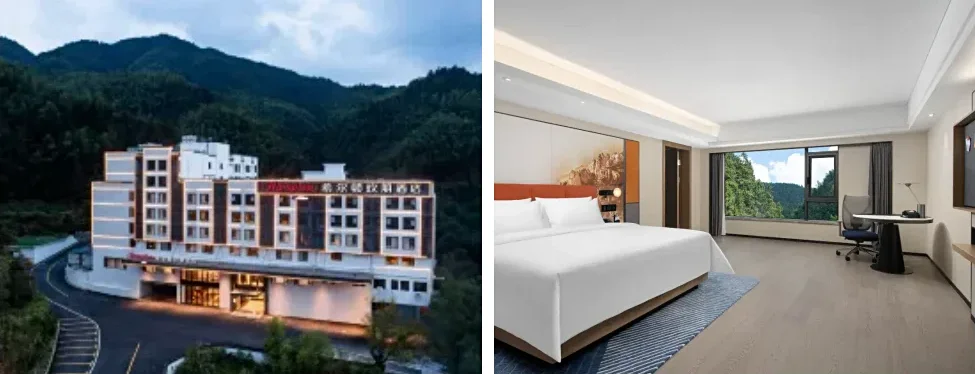
Hampton by Hilton Huangshan Scenic Area South Gate
4-star · 9.8 rating · 1,000+ reviews
A 5-minute walk to the transfer center.
JI Hotel (Huangshan Scenic Area South Gate Transfer Center Tangkou)
4-star · 9.8 rating · 250+ reviews
A newly opened hotel located directly across from the transfer center.
Note: There are two JI Hotels in Tangkou—this is the newer one. The other is much farther away, so double-check the location when booking.

Hotels on the Summit:
There are seven hotels on the peak, and all of them have restaurants open to the public (even if you aren’t staying there). The best value options are:
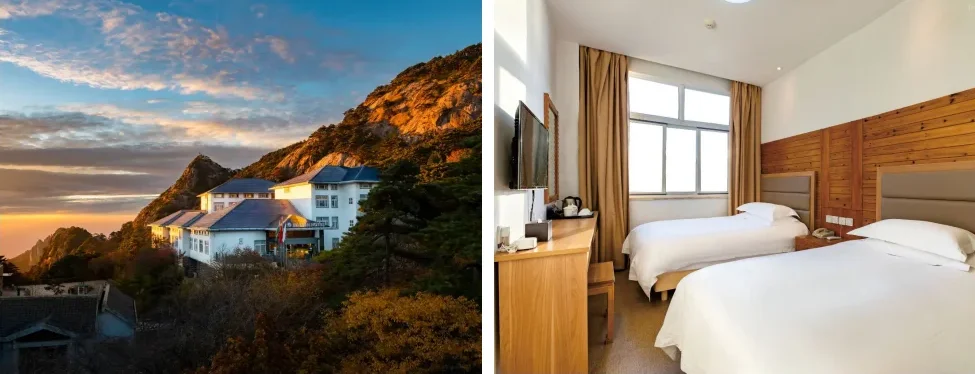
Huangshan Baiyun Hotel
4-star · 9.7 rating · 34,000+ reviews
Excellent value and a prime location.
Tip: Rooms usually need to be booked 1–3 months in advance. If it’s sold out, keep checking—cancellations do happen.
It’s a 15–20 minute walk to Bright Summit (Guangmingding), one of the best spots for sunrise and sunset.
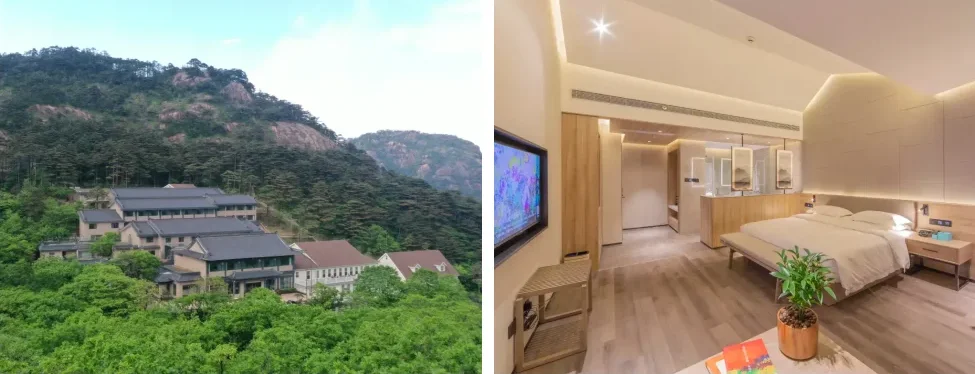
Huangshan Paiyun Hotel
4-star · 9.7 rating · 7,500+ reviews
While the location isn’t as central as Baiyun, it offers newer facilities and nearby viewpoints for sunrise and sunset.
Where to Eat & Buy Supplies:
While you will find proper convenience stores along the mid-mountain hiking trails, there are none at the summit. However, don’t worry—the summit hotels mentioned above all have restaurants where you can sit down for a hot meal. For a quicker bite, small kiosks near the peaks sell snacks, drinks, and basic supplies. Pricing Note: Since most goods are transported uphill by porters or drones, expect prices to be higher (e.g., bottled water ~10 RMB).
Tickets & Essential Information
1. Visitor Limits & Booking
Daily Limit: To ensure a good experience, the scenic area enforces a strict daily limit on visitor numbers.
For International Travelers: You can book tickets in advance via Trip.com. However, since the Chinese reservation system can be tricky for international visitors, you can usually buy tickets on-site with your passport at the South Gate Transfer Center (except during major holidays like National Day in October).
Tiandu Peak: You can also secure a same-day climbing slot for the famous Tiandu Peak on-site.
2. Choose Your Route Before Buying Tickets
Decide your route first, as the Cableway access points are different.
| Feature | Ciguang Pavilion (Front Mountain) | Yungu Temple (Back Mountain) |
|---|---|---|
| Starting Point | Ciguang Pavilion | Yungu Temple |
| Scenery Style | Grand & dramatic (classic views) | Gentle & scenic (more relaxed start) |
| Physical Effort | Steeper, many steps (more tiring) | Gradual ascent, fewer steps (easier) |
| Route Logic | Highlights first, easier later | Warm-up first, highlights later |
| Crowd Tip | Most tour groups start at Yungu Temple. If you want a quieter experience, start here. | — |
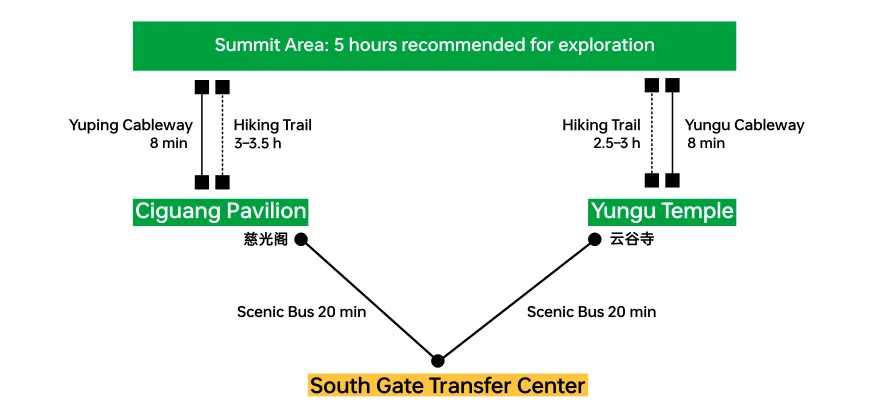
3. Recommended Route: Up via Ciguang Pavilion (Front Mountain)
- 3.1 Scenic Bus: From the South Gate Transfer Center, take the shuttle to Ciguang Pavilion. (~20 mins, 19 RMB, buy tickets on-site).
- 3.2 From Ciguang Pavilion:
- Cableway: Yuping Cableway (~8 mins, 90 RMB).
- Hiking: ~3 hours, 6 km, approx. 6,500 steps (elevation gain ~880 m).
- 3.3 Exploring the Summit & Descent
- On the Summit: Allow 5–8 hours to explore the summit area and side trails.
- The Descent: Head down to Yungu Temple (via Yungu Cableway or hiking the Back Mountain trail) to complete your trip.
4. Ticket Prices
- Entrance Ticket: 190 RMB (Valid for 3 days).
Half price: Ages 6–18 / Seniors 60–64.
Free: Under 6 / 65+ (Passport required). - Scenic Bus: 19 RMB (one-way).
- Cableways: Yuping (90 RMB), Yungu (80 RMB).
5. Operating Hours
Scenic Shuttle Buses:
Peak Season (Mar–Nov): Weekdays 6:40–16:30 (uphill); Weekends 6:10–17:00 (uphill). Off-Season (Dec–Feb): 7:40–16:00 (uphill).Cableways:
Peak Season: Weekdays 7:00–17:10; Weekends 6:30–17:40.
Off-Season: 8:00–16:40.Hiking Trail Entrance:
Entry Allowed: 6:00–15:00 (to prevent getting lost after dark).
Exit: Open 24 hours.
How to Avoid the Crowds
Many visitors find Huangshan breathtakingly beautiful, but some feel the experience is spoiled by the massive crowds. To enjoy the mountain, you need a strategy.
Why Huangshan Gets So Congested
- Iconic Status: As one of China’s “Big Three” (alongside Zhangjiajie and Jiuzhaigou), the sheer number of visitors is always high.
- The “Bottleneck” Effect: Unlike the wide-open spaces of other parks, Huangshan’s trails are often narrow. With hikers going both up and down the same stairs, traffic jams are common.
- Cableway Capacity: Most visitors rely on cableways, but they have limited capacity. During peak hours, wait times can be frustrating.
Comparison:
- Zhangjiajie: Better route design (often one-way) keeps people moving.
- Jiuzhaigou: Similar to the flow at Disneyland, the park is massive enough that visitors stay spread out rather than clustering in one spot.
Top Strategies to Beat the Crowds
Timing is Everything:
- Avoid weekends and major Chinese public holidays (especially the first week of October).
- The “Early Bird” Rule: Catch the very first scenic shuttle bus in the morning.
- The “Early Exit” Rule: Head down on the Cableway before 3:00 PM.
The Overnight “Hack” (Highly Recommended):
- Staying on the mountain allows you to move against the flow:
- Go up in the afternoon (after 1:00 PM) when most day-trippers are heading down.
- Come down in the morning when the new crowds are just starting their ascent.
Skip the Cableway Queues by Hiking:
- Wait times for Cableways can be: Peak Season: 30–60 minutes, holidays: 2+ hours. If you are physically active, hiking one way is often faster than waiting in line.
- Ciguang Pavilion → Summit: ~3–3.5 hours (up).
- Yungu Temple → Summit: ~2.5–3 hours (up).
- Note: Going down usually takes about half the time of going up.
Huangshan One-Day Itinerary
Pros:
- Time-efficient: Covers the highlights in a single day.
- Budget-friendly: No need to pay for expensive summit hotels.
Cons:
- No Sunrise/Sunset: You’ll miss the mountain’s most famous lighting.
- Crowds: Since most visitors follow this schedule, you’ll be moving with the “herd.”
How to Beat the Crowds:
- Catch the earliest shuttle: Aim for the first bus (6:40 AM weekdays / 6:10 AM weekends).
- Early Descent: Try to start your way down before 3:00 PM.
- Pro Tip: Arrive at the South Gate Transfer Center 30 minutes before the first bus. Buses often depart early if they fill up.
Preparation:
- Stay in Tangkou Town the night before.
- Book your tickets and reserve your Tiandu Peak slot one day in advance.
The Route:
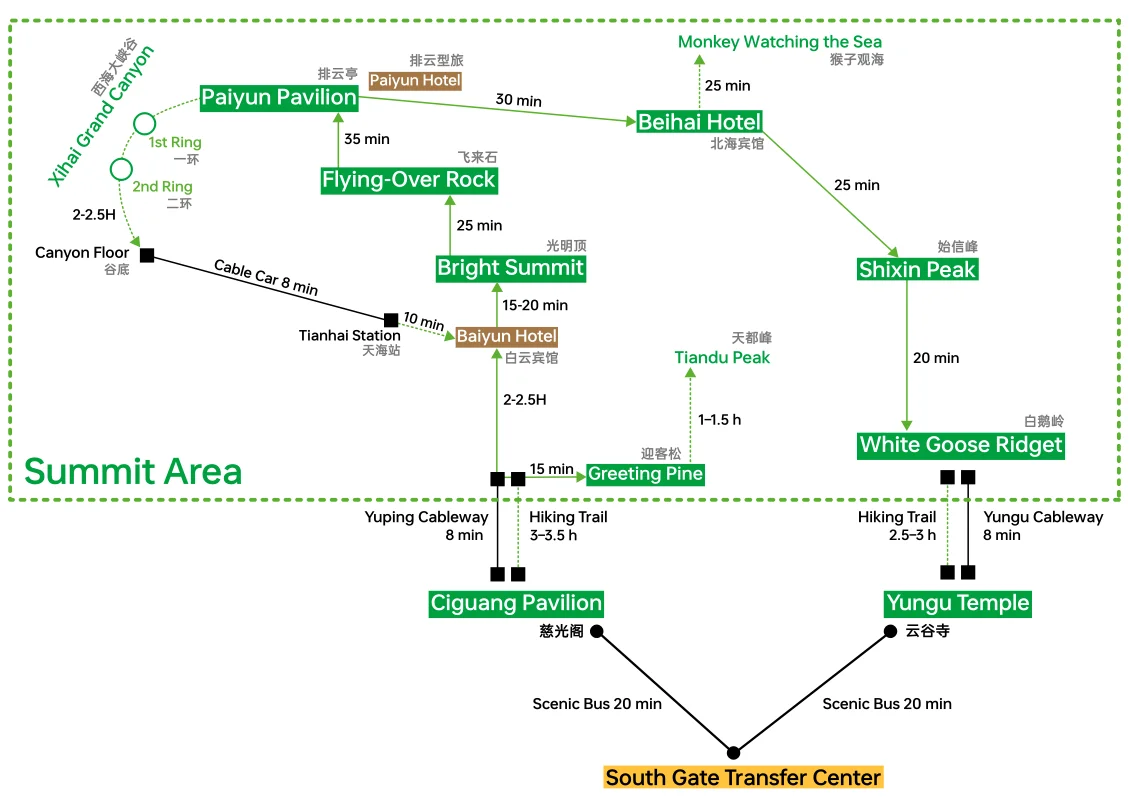
- South Gate → Ciguang Pavilion (慈光阁): Shuttle bus (~20 mins).
- Ascent: Take the Yuping Cableway (玉屏缆车) to the summit (~8 mins).
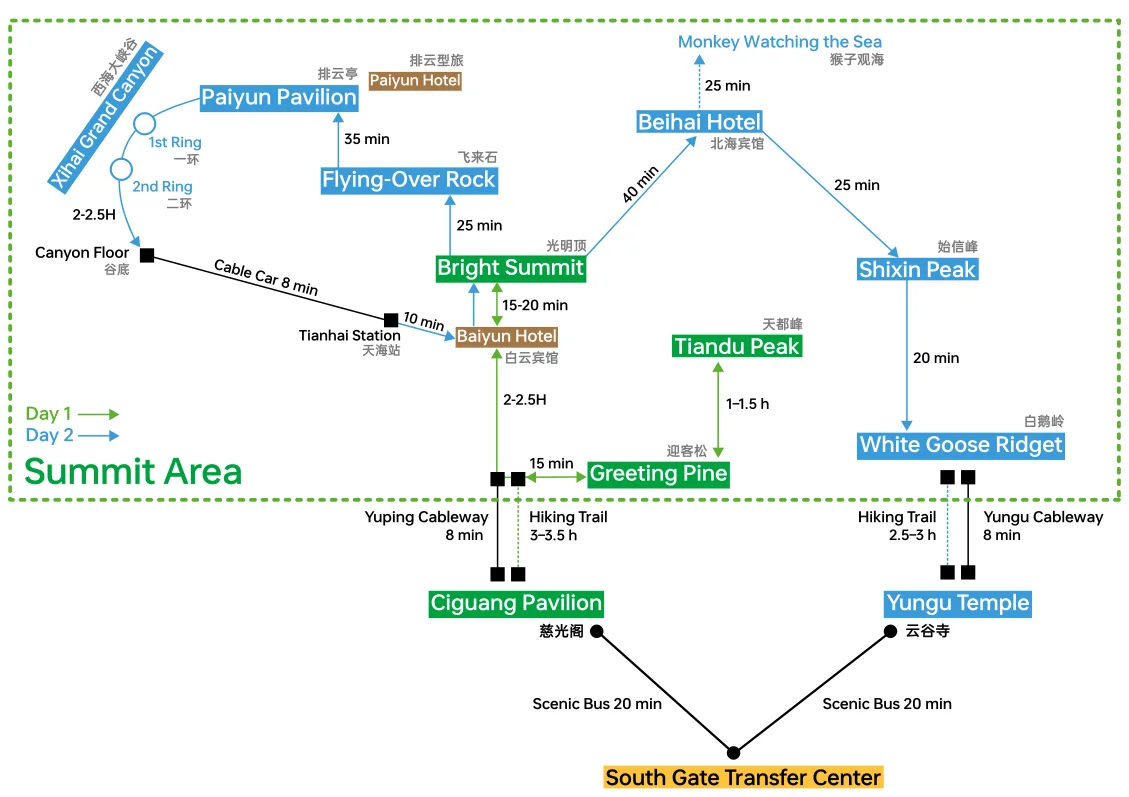
- The Classic Hike: * Greeting Pine (Welcome Pine 迎客松) → Bright Summit (光明顶) → Flying-Over Rock (飞来石) → Paiyun Pavilion (排云亭) → Beihai Hotel (北海宾馆) → Shixin Peak (始信峰) → White Goose Ridge (白鹅岭). Note: The section between Greeting Pine and Bright Summit is a bottleneck—expect it to be the most crowded.
- Descent: Take the Yungu Cableway (云谷索道) down (~8 mins) and shuttle back to the South Gate. Total Hiking Time: Approx. 4–5 hours (including breaks and photos; excludes wait times for Cableways).
Optional Add-ons (If you have the energy):
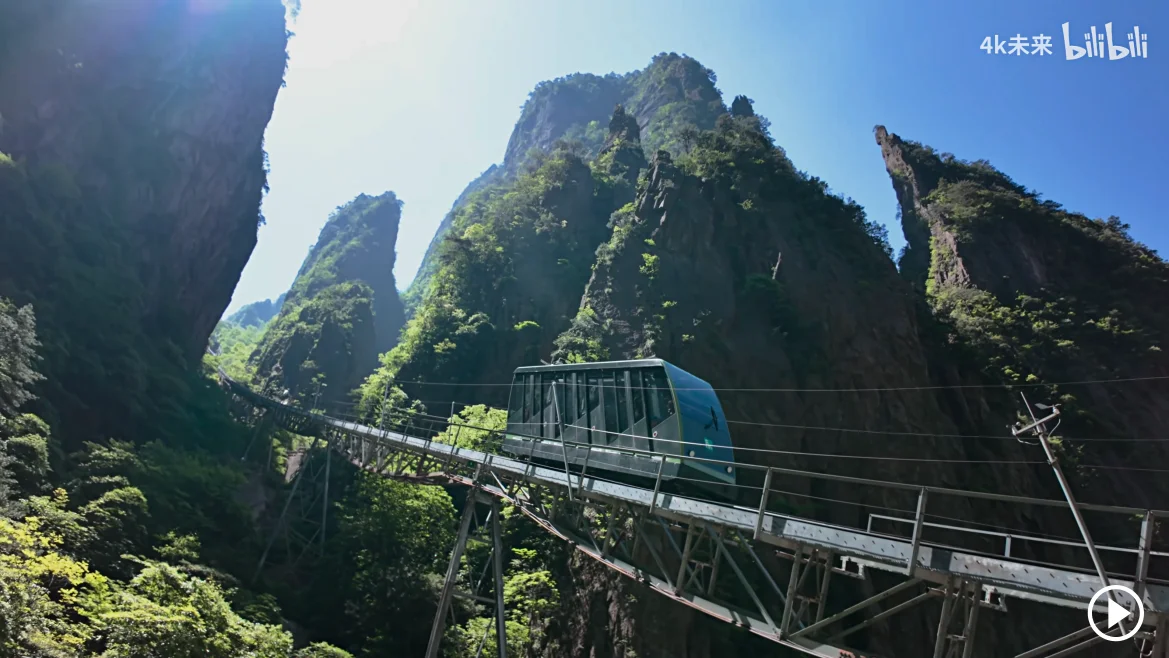
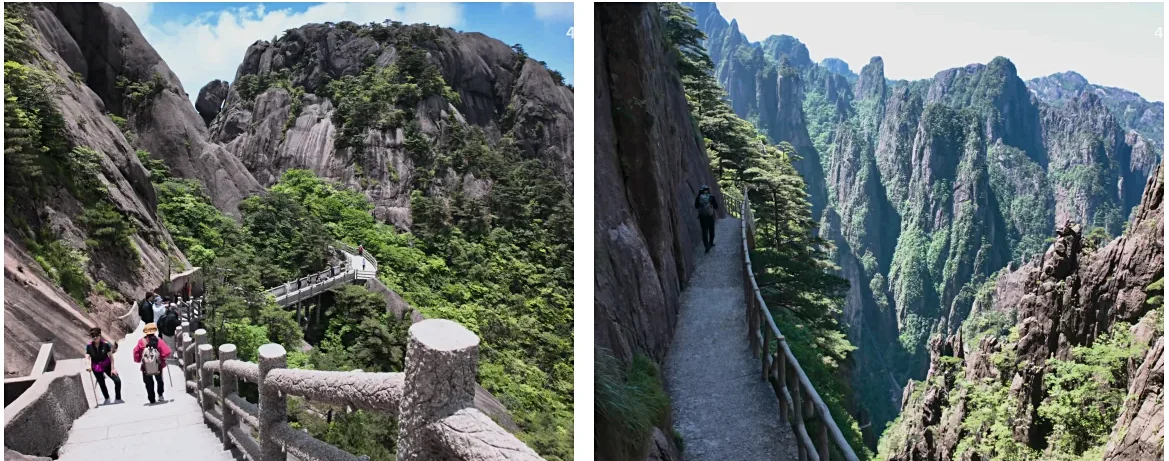
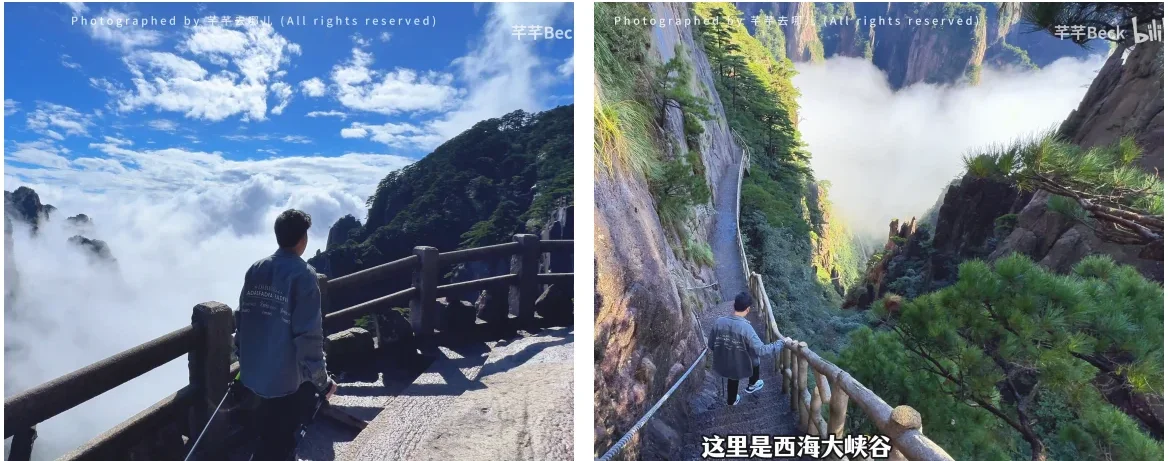
Xihai Grand Canyon (西海大峡谷): Hike the 1st and 2nd Rings for the best views, then take the Xihai Grand Canyon Cable Car back up. (Allow an extra 3 hours). Watch: 漫游黄山西海大峡谷,第一奇山果然名不虚传
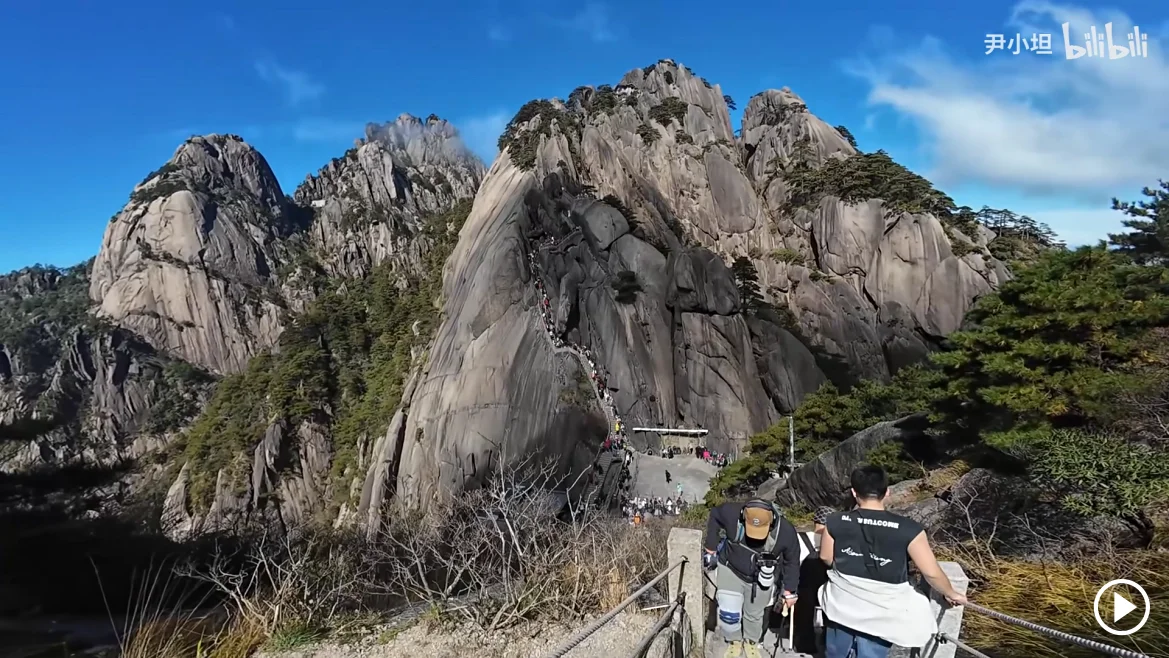
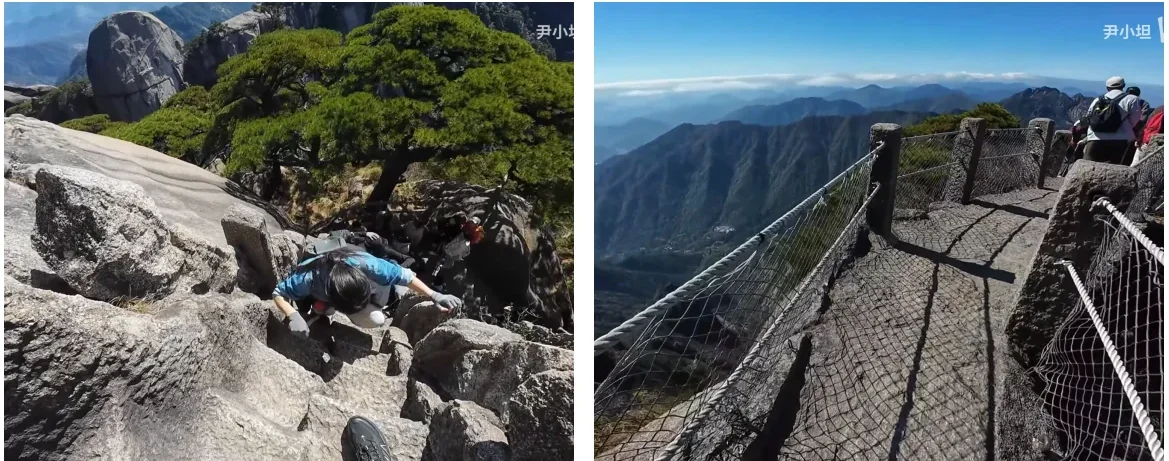
Tiandu Peak(天都峰): The most famous (and steepest) summit. (Requires reservation; allow an extra 3 hours). Watch: 第一视角记录爬黄山天都峰
Monkey Watching the Sea (猴子观海): A classic viewpoint near Beihai. (Allow an extra 1 hour). Watch: 徒步三山五岳之安徽黄山,打卡迎客松,猴子观海
Huangshan Two-Day Itinerary
Pros:
- Full Experience: You get to see both sunrise and sunset.
- Avoid the Herd: By staying overnight, you can explore the trails while one-day visitors are either heading up or down, making for a much more peaceful trip.
Cons:
- Pricey & Basic: Summit hotels offer basic amenities at premium prices and often require booking 1–3 months in advance.
- The “Weather Gamble”: Even with the extra time and money, sunrise and “seas of clouds” are never guaranteed due to unpredictable mountain weather.
Day 1: Beat the Rush
- 1:00 PM: Catch the shuttle bus from the South Gate Transfer Center to Ciguang Pavilion (慈光阁). (~20 mins; minimal to no wait at this hour.)
- Ascent: Take the Yuping Cableway (玉屏索道) to the summit. (~8 mins; usually no queue.)
- Afternoon Hike: * Hike Tiandu Peak (天都峰). (~3 hours; advance reservation required.)
- Visit the Greeting Pine (Welcome Pine 迎客松) and continue to Baiyun Hotel 白云宾馆 for check-in. (~2.5 hours walking.)
- Evening: Enjoy the sunset and stargazing at Bright Summit (光明顶), just a 15-minute walk from the hotel. You can find the daily sunset schedule here to ensure you’re there on time.
Day 2: The Grand Tour
Sunrise: Watch from Bright Summit (光明顶) or the nearby Aoyu Peak (鳌鱼峰) for a slightly less crowded view.
The Route:
- Flying-Over Rock (飞来石) → Paiyun Pavilion (排云亭) → Xihai Grand Canyon (西海大峡谷).
- Hike down through the 1st and 2nd Rings to the canyon floor, then take the Xihai Grand Canyon Cable Car back up. (Allow ~3 hours total.)
Afternoon: Return to Tianhai Station (天海站) and follow the path to:
- → Beihai Hotel (北海宾馆) → Shixin Peak (始信峰) → White Goose Ridge (白鹅岭). (~2 hours.)
- Tip: If you have the energy, detour to Monkey Watching the Sea (猴子观海). (Adds ~1 hour.)
Descent: Aim to take the Yungu Cableway (云谷索道) down before 2:00 PM to avoid the long afternoon queues.
Accommodation & Logistics
Alternative Stay: If Baiyun Hotel is full, try Paiyun Hotel (排云型旅). You can watch the sunrise/sunset from nearby Danxia Peak (丹霞峰).
Crucial Note: Hiking Tiandu Peak takes ~3 hours, and getting from there to Danxia Peak takes another ~3 hours. If you stay at Paiyun, skip Tiandu Peak to ensure you don’t miss the sunset.
Luggage Storage: Available at the South Gate Transfer Center lockers for 5 RMB/hour (Max 45 RMB/day). If lockers are full, nearby shops and restaurants offer storage at lower rates.
Best Time to Visit Huangshan
Top Recommendation:
Autumn (mid-October to early November): This season offers the best visibility, with crisp air and stable weather. It’s the most reliable time for photography.
Runner-Up:
Spring (March to May): Mild temperatures and the highest chance of witnessing the famous “Sea of Clouds.”
The “Wildcard” Season:
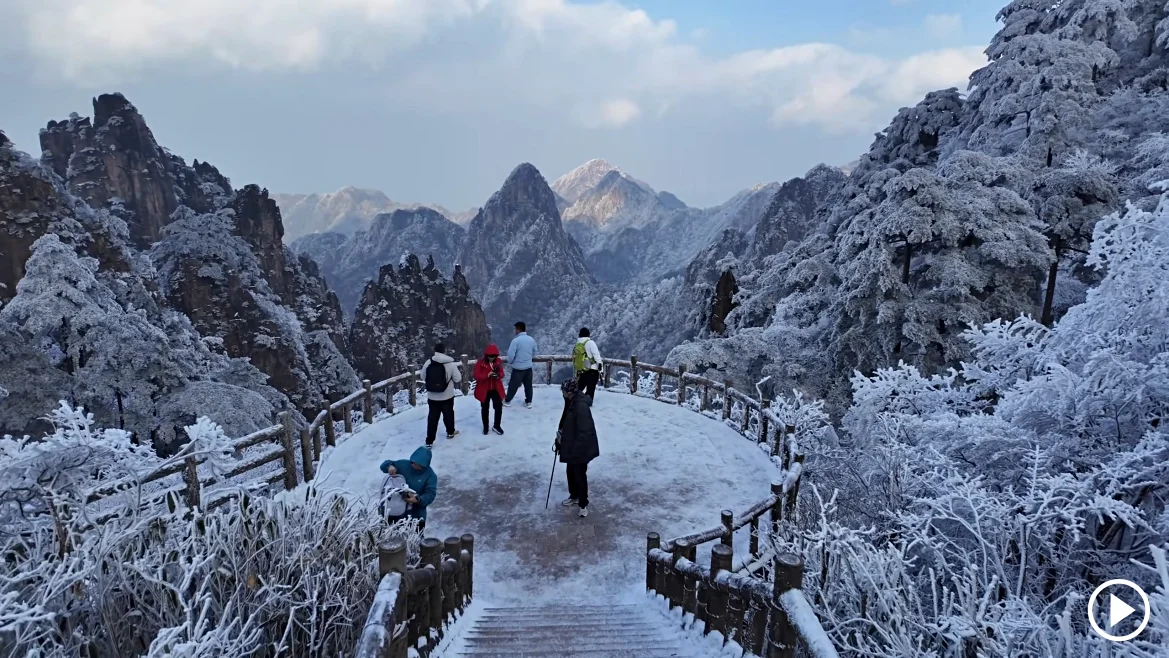
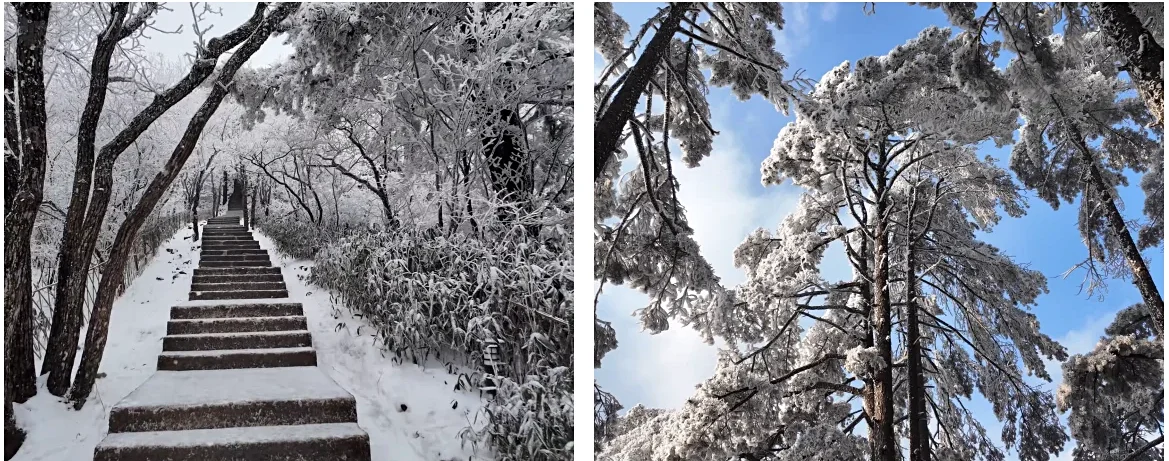
Winter (December to February): Crowds disappear, and if you’re lucky, you’ll see a transformed landscape of snow and rime ice (frozen mist on trees).
Spring (March – May)
- Vibe: Often misty and ethereal. In March, the mountain is still “waking up,” so it’s not fully green yet.
- Highlights: Azaleas begin to bloom in April, and by May, the scenery is lush and vibrant.
- Warning: Strictly avoid the first week of May (Labor Day holiday) unless you enjoy shoulder-to-shoulder crowds.
Summer (June – August)
- Vibe: Hot at the base but a perfect “cool escape” on the summit (around 12–20°C).
- Highlights: Deep greens and dramatic summer storms that clear into stunning views.
- Cons: June is the rainiest month. July and August see a huge surge in family travel due to school holidays.
Autumn (September – November)
- Vibe: Crisp, clear, and golden.
- Highlights: The most stable weather of the year with minimal rain and excellent visibility.
- Warning: Avoid the first week of October (National Day holiday)—it is the busiest time of the year.
Winter (December – February)
- Vibe: Quiet and stark. Temperatures can drop to -10°C.
- Highlights: While the landscape can look a bit barren on grey days, a snow-covered Huangshan is arguably its most beautiful form.
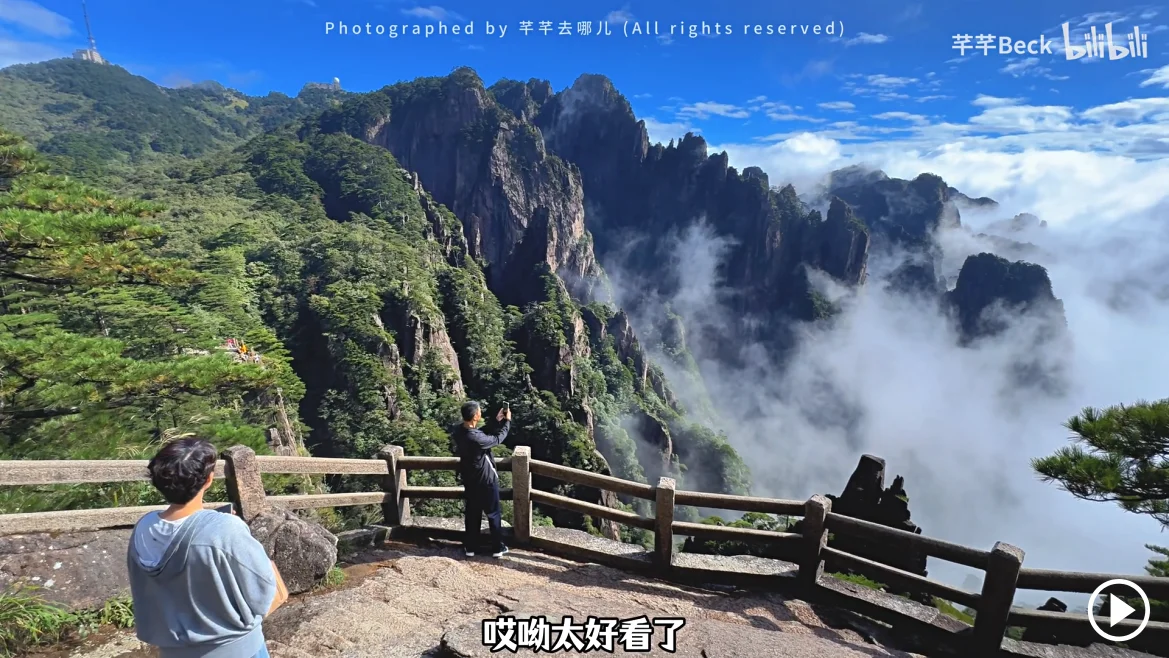
- Winter Closures: Please note that Tiandu Peak (天都峰) and the Xihai Grand Canyon (西海大峡谷) are strictly closed during the winter season (usually from December to the end of March) for safety due to ice and snow.
Watch: 我在云端之上找到了一个真实的隐藏仙境!
Watch: 徒步黃山賞雪景霧凇,冬季黃山人少景美
Final Thoughts
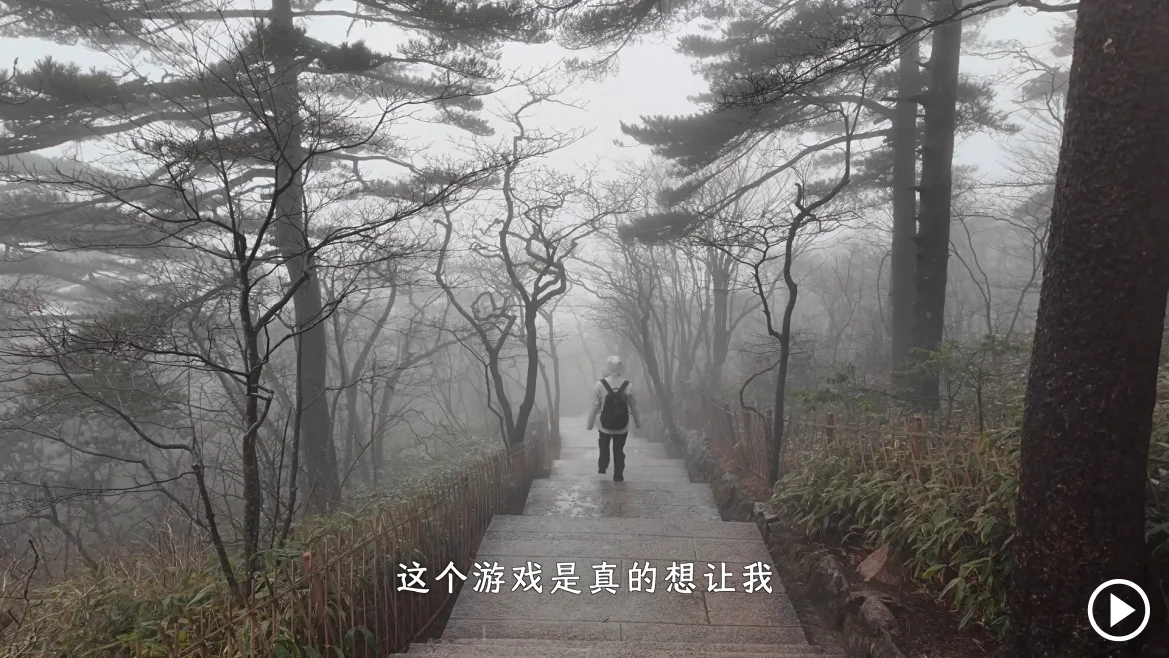
Visiting Huangshan requires a bit of luck. You might encounter an ordinary-looking, misty mountain—or you might witness a once-in-a-lifetime sunrise above a sea of clouds. That’s why on Chinese social media, a trip here is often called a “gamble.” You never quite know what nature will deal you, but when you win, the payoff is incredible.
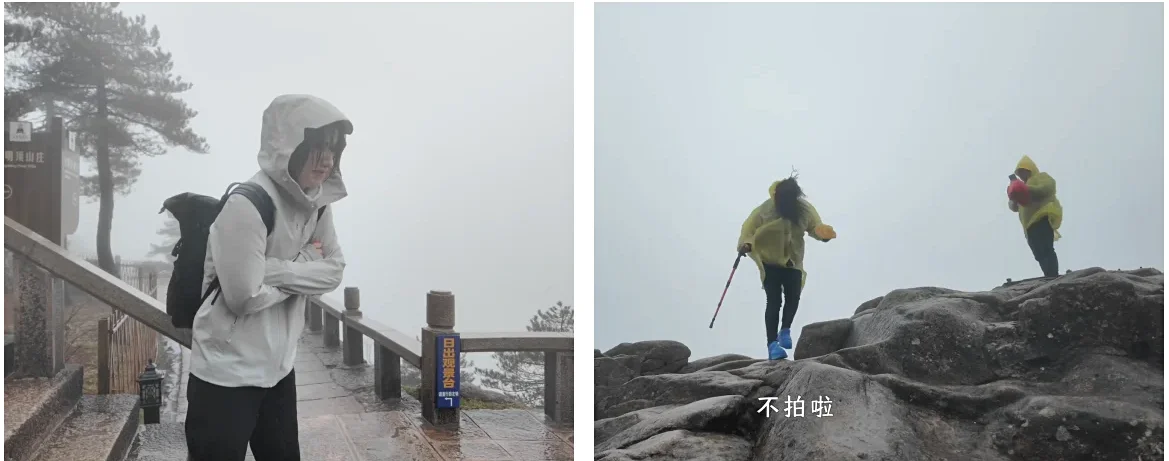
Watch: 雾雨天徒步黄山!忽然懂了什么叫中国山水画
Common Questions & Logistics
Q: Should I pack a lot of food for the hike?
A: No need. Just 1–2 bottles of water and some light snacks are enough. You can buy supplies at the summit hotels or kiosks, and there are proper restaurants available.
Important: Tents and open flames (camping stoves) are strictly prohibited anywhere in the Huangshan Scenic Area.
Q: Are there enough toilets on the mountain?
A: Yes. Restrooms are spaced roughly an hour apart along the main trails, and the hygiene standards are generally very good.
Q: Is there mobile signal on the mountain?
A: For the most part, yes. Aside from a few deep canyons, most hiking routes have reliable cell service.
Q: What if I miss the last cableway on a one-day trip?
A: Technically, your only official option is to hike down (1.5–3 hours).
Inside Tip: During peak season, the staff often follow a specific routine: they may stop the cableway at the official closing time for about an hour of daily maintenance, but then reopen it for one final 20-minute window to clear any remaining passengers.
Don’t give up immediately! Always check with the staff on-site to see if there will be one last “sweep” to take people down.
Q: What happens during strong winds or heavy rain?
A: Cableways may suspend operations for safety. If this happens, you must either wait for the weather to clear or hike up/down in the rain. Always bring a raincoat and dress in layers, as temperatures drop quickly when it’s wet.
Q: What gear do I actually need?
A: Since Huangshan is highly developed with paved stone steps, you don’t need professional mountaineering gear.
- Shoes: Sturdy walking shoes or trail runners with good grip.
- Walking Sticks: Cheap wooden trekking poles can be bought at the base (Tangkou) for a few RMB.
- Extras: Bringing your own gloves (for cold or metal railings) and a headlamp for emergencies is highly recommended.
Thank you for reading. Hope you have a wonderful journey! ヽ(´▽`)/