Nanjing Itinerary: A Complete 2 Day Guide for First-Time Visitors
Nanjing is located in eastern China, about 300 km from Shanghai. It has a population of around 9.6 million and covers a slightly larger area than Shanghai. By total GDP, Nanjing ranks around 10th among Chinese cities, with an economy roughly comparable in size to Madrid, Spain. Its major industries include technology-driven sectors such as software, semiconductors, biomedicine, and industrial robotics.
Nanjing has many attractions, but I have selected just four for this guide:
Nanjing City Wall — experience the historic city and enjoy views of Nanjing’s old town and skyline
Nanjing Massacre Memorial Hall — learn about Nanjing’s experience during World War II
Laomendong — explore historic streets, try local snacks, and see one of the city’s major lantern festivals (late December to early May)
Niushou Mountain — experience Buddhist culture in a striking modern architectural setting
When to visit:
- Spring (March–May) and autumn (September–November) are the best seasons to visit, with comfortable temperatures. From late March to early April, you can see cherry blossoms; in October, osmanthus flowers bloom and their fragrance fills the city; by mid-November, autumn foliage and golden ginkgo trees add color to the city.
- Winter (December–February) is relatively cold, with temperatures generally around 1–10°C (34–50°F). Because of the humidity, it can feel colder than the actual temperature, and the bare trees make the scenery less attractive. However, there are fewer tourists, hotels offer better value, and you can also experience Nanjing’s famous lantern festivals.
- Summer (June–August) is the least pleasant season for sightseeing. From mid-June to early July, the city enters its plum rain season (a damp, rainy period), with prolonged periods of cloudy, rainy, hot, and humid weather. July and August are typically very hot with strong sunshine, making indoor attractions and evening sightseeing the better options.
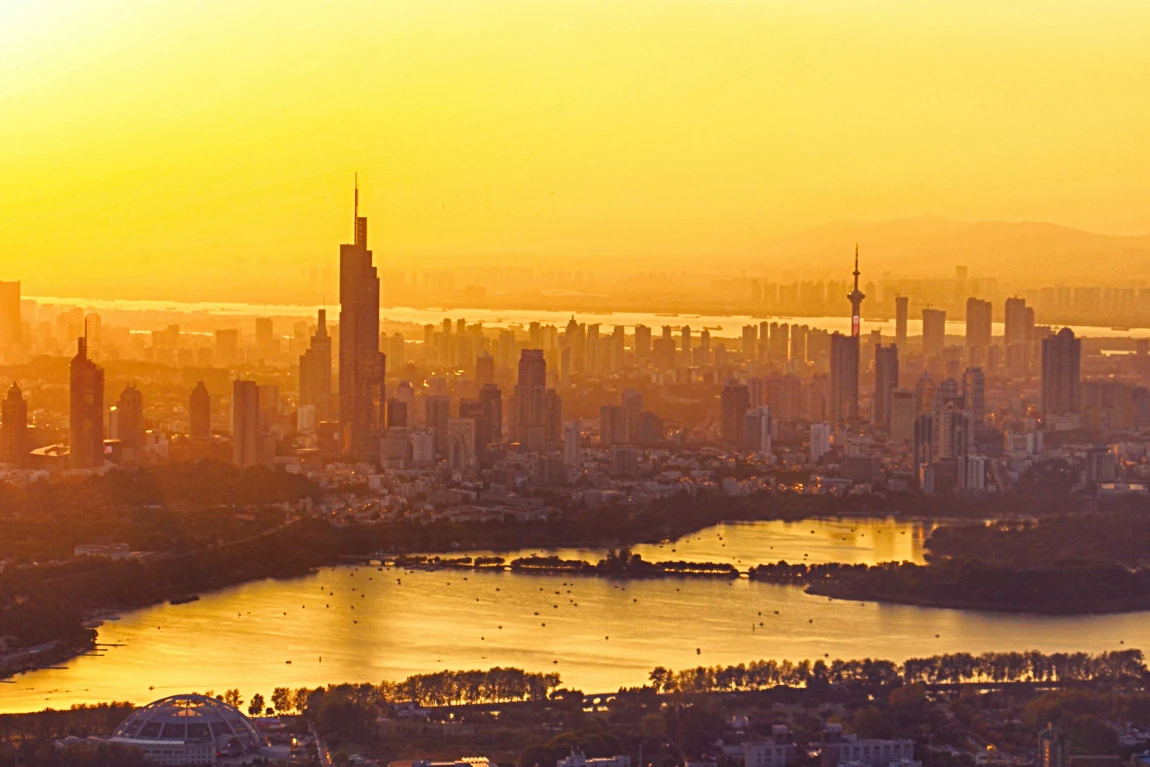 by Junyao Yang
Getting to Nanjing from Shanghai
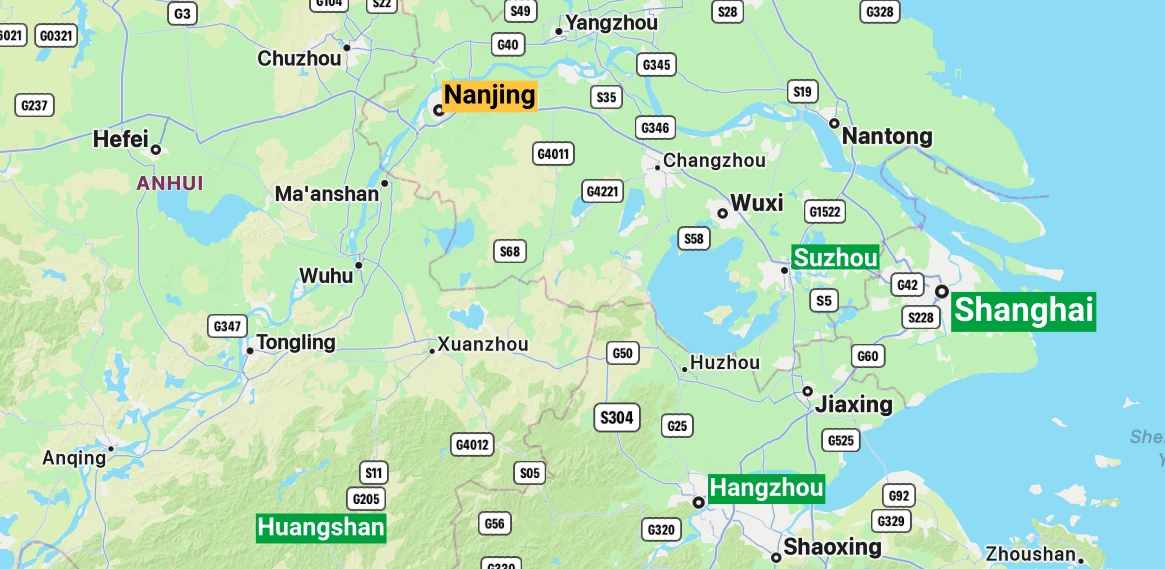
High-speed trains are the most convenient way to travel between Shanghai and Nanjing.
Departure Stations in Shanghai:
- Shanghai Hongqiao Railway Station: About 20 km (12 miles) from The Bund, or around 40 minutes by car. It is the main high-speed rail hub in Shanghai, with the most frequent departures to Nanjing.
Arrival Station in Nanjing:
- Nanjing South Railway Station (南京南站): Nanjing’s main high-speed rail hub. It is about 8 km (5 miles) from the city center, or around 20 minutes by car.
Travel Time: 1–2 hours
Ticket Price: Around ¥150 for Second Class seat
Where to buy tickets: Use Trip.com (better for international payment methods) or the 12306 Official Website (China Railway’s official platform).
Do you need to book in advance?
- If you’re traveling on a weekend or public holiday, or if you want to take one of the fastest trains that take only about 1 hour, it’s best to book in advance.
- One useful thing to know is that you can change your ticket once for free on the day of travel. So even if you realize you’re running late and might not make your original train, you can usually switch to a later one without losing the money you paid for the ticket.
Note:
- When searching for trains, you can also choose Shanghai Railway Station (上海站) as your departure station. However, trains from Shanghai Station are generally slower and less frequent.
- In Nanjing, you can also choose Nanjing Railway Station (南京站) as your arrival station, but there are fewer high-speed trains to this station, and it is about the same distance from city center as Nanjing South Railway Station.
- For most travelers, Shanghai Hongqiao → Nanjing South is therefore the best option.
Getting to the City from Nanjing Lukou Airport
Nanjing Lukou International Airport (NKG) is about 38 km (24 miles) from downtown Nanjing. The journey usually takes around 40 minutes to 1 hour by car, depending on traffic.
The airport has two terminals, T1 and T2. T1 is mainly used for domestic flights, while T2 mainly handles international flights. The two terminals are about 540 meters (1,770 feet) apart and can be reached by a 5–8 minute walk. A free shuttle bus is also available.
Getting to City Center:
- Ride-hailing or taxi: A ride-hailing ride (such as Didi) to Nanjing South Railway Station takes about 40 minutes and costs around ¥100. To the Xinjiekou area, it takes about 1 hour and costs around ¥120. Taxis are also available, but typically cost about ¥30–50 more. These prices are for daytime travel without heavy traffic.
- Metro: Follow the signs for the metro and take Line S1, which runs directly to Nanjing South Railway Station. The journey takes about 40 minutes and costs ¥7. To reach Xinjiekou Station, transfer to Line 1 at Nanjing South Railway Station. The entire journey takes about 1 hour and 10 minutes and costs ¥8. The metro generally operates from around 6:00 am to 10:42 pm.
Where to Stay in Nanjing
Nanjing South Railway Station
If you’re staying in Nanjing for just one night and plan to take a high-speed train to your next destination, staying near the railway station is a convenient option.
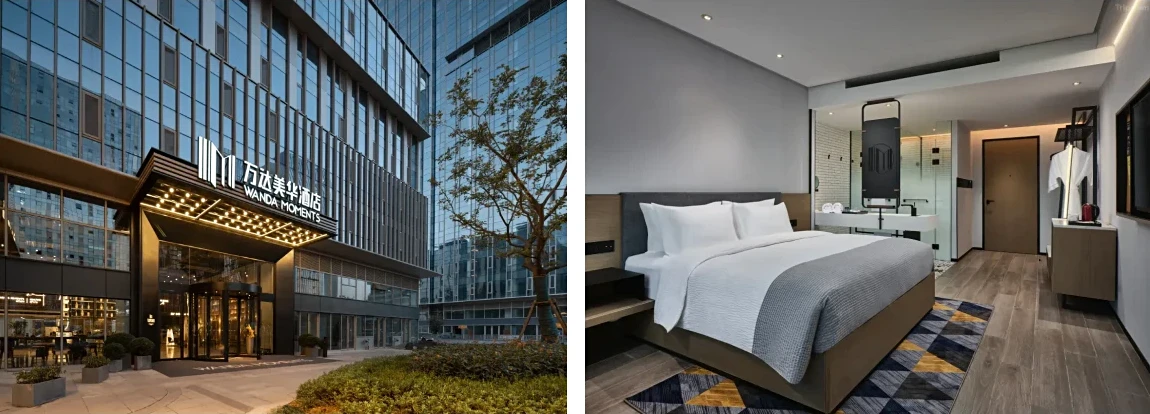
Wanda Moments Nanjing South Railway Station
- 4-star | Rating: 9.5
- Exit from the South Square of the railway station, and the hotel is directly across the road. It’s less than a 10-minute walk from the station.
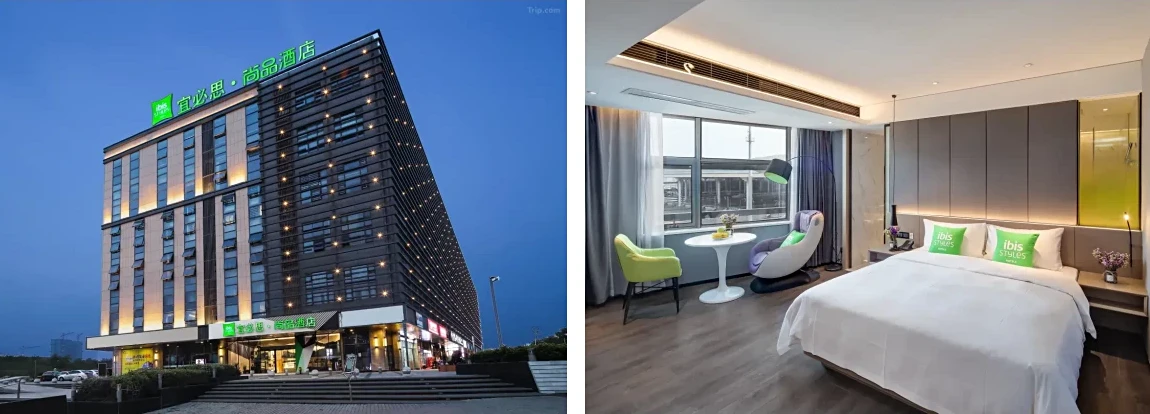
Ibis Styles Hotel (Nanjing South Railway Station Subway Station Store)
- 3-star | Rating: 9.6
- Exit from the North Square of the railway station. The hotel is diagonally across the road and less than a 5-minute walk away.
Xinjiekou
Xinjiekou is Nanjing’s busiest city center commercial district, with excellent access to restaurants, shopping, and public transportation. If you’re staying for 2–3 nights and enjoy going out in the evening, this is probably the best area to stay.
- 4-star | Rating: 9.6
- About a 5-minute walk from the metro station. Note that Xinjiekou Metro Station is very large and can be quite confusing. The hotel is also right next to Deji Plaza shopping mall.

- 5-star | Rating: 9.4
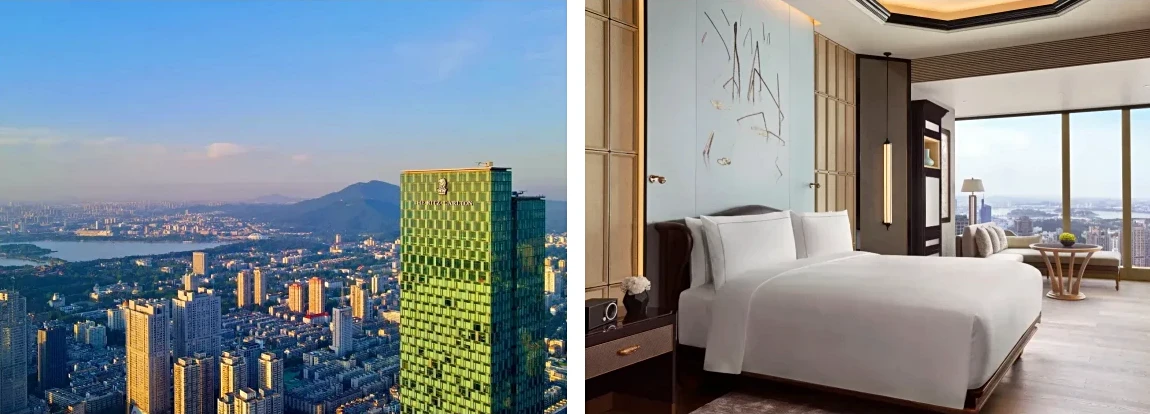
- Located in the tower of Deji Plaza (the hotel occupies floors 38–62, while floors B1–7 are the shopping mall). The hotel has its own dedicated elevators. If you’re taking a taxi or ride-hailing car, set the destination to “Deji Plaza Phase II Office Tower / The Ritz-Carlton, Nanjing” rather than simply searching for Deji Plaza.
Nanjing Itinerary & Getting Around
Day 1
Arrive in Nanjing in the morning. Spend 30 to 60 minutes walking on the Ming City Wall to enjoy views of the city. After lunch, visit the Nanjing Massacre Memorial Hall to learn about Nanjing’s World War II history (closed on Mondays; expect to spend 1–2 hours here). In the late afternoon, head to Laomendong to explore historic streets and try local snacks. (If you arrive early, you can also visit the neighboring Bao’en Temple.) If you visit between late December and early May, don’t miss the major lantern festival at nearby Bailuzhou Park after dinner!
Day 2
In the morning, visit Niushou Mountain to experience modern Buddhist architectural design (it is truly impressive). Plan for about 3 hours for the visit, excluding transport time. Depart Nanjing in the afternoon for your next destination.
Map of Nanjing Attractions: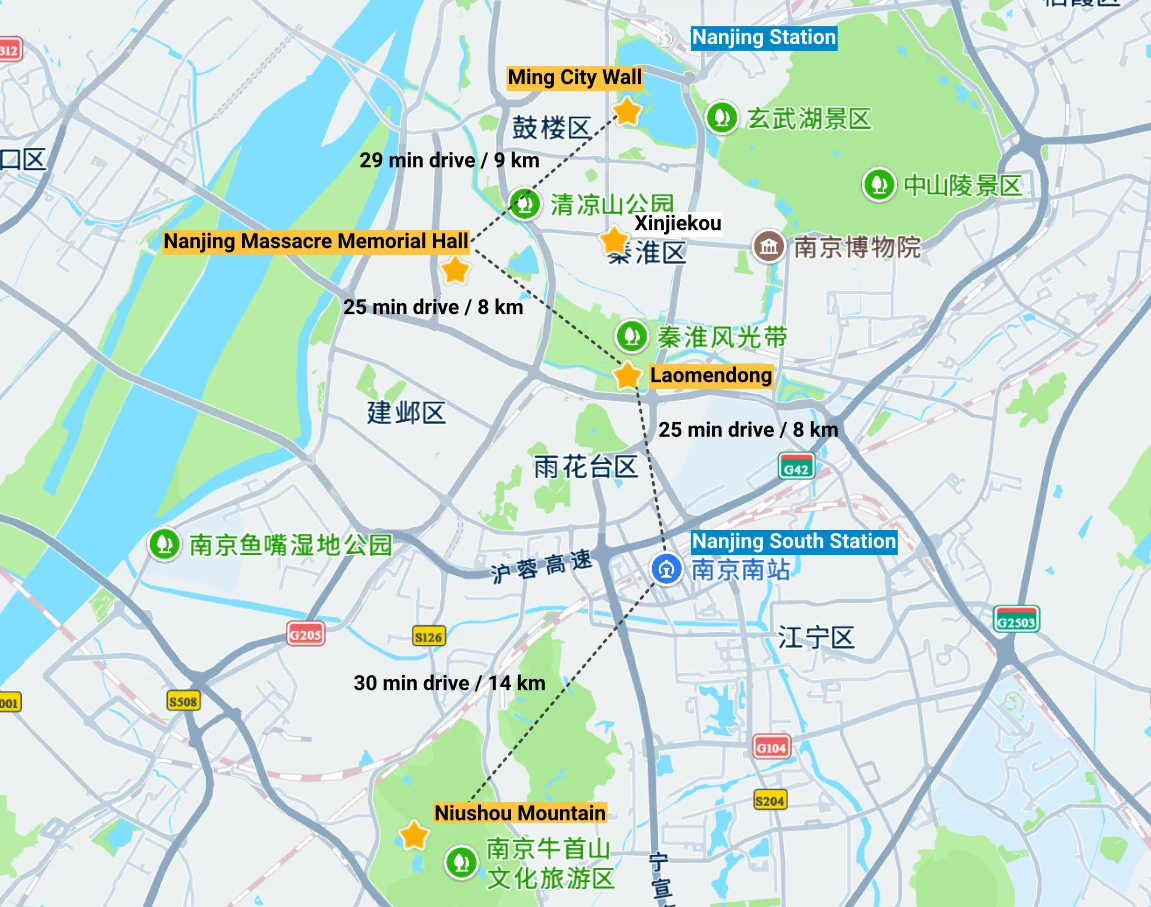
Getting Around Nanjing:
- DiDi (Ride-hailing): The easiest and most convenient way to get around Nanjing.
- Metro: Nanjing’s metro gates do not support tap-to-pay with international credit cards. The most seamless way to pay is by scanning the transport QR code within Alipay.
Top Attractions in Nanjing
Nanjing Ming City Wall
The Nanjing Ming City Wall was built in 1366 and is the largest surviving ancient city wall system in the world. The wall originally had a circumference of 35.2 km (21.9 miles). Today, 25.09 km (15.6 miles) remains intact. The walls are 14–26 meters (46–85 feet) high, with 13 surviving gates.
Unfortunately, due to warfare and later urban development, the wall is no longer a continuous ring. Instead, the surviving sections are divided into four separate sections.
Opening hours: 8:30 am–5:00 pm for getting onto the wall; you can leave at any time
Ticket: ¥30
Recommended time: 30 minutes–1 hour
How to Visit:
- I recommend taking a ride-hailing car to “Nanjing City Wall Scenic Area – Xuanwu Gate 南京城墙景区-玄武门” Alternatively, take Metro Line 1 to Xuanwumen Station and use Exit 3.
- Enter the wall through Xuanwu Gate (玄武门) and buy your ticket at the entrance.
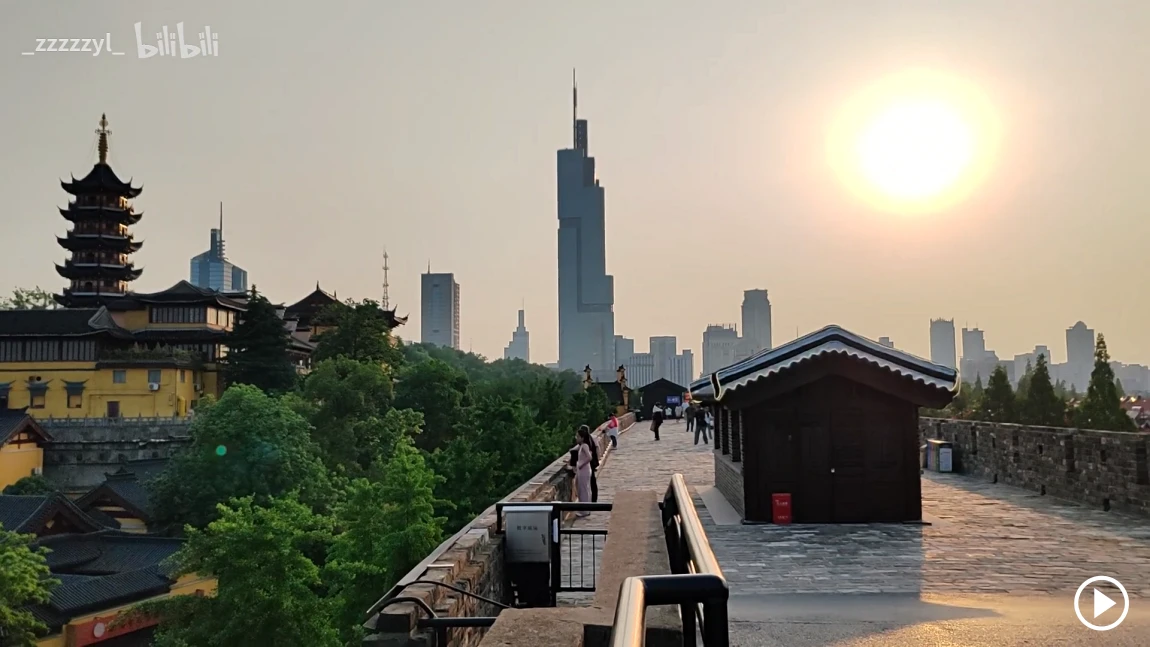
- Walk about 1.4 km (0.9 miles), which takes around 30 minutes, to Jiefang Gate (解放门). However, don’t go down immediately. Continue for another 100 meters or so. At the bend in the wall, you can get a great photo with the historic Jiming Temple and Zifeng Tower, Nanjing’s tallest building, in the same frame. Then walk back to Jiefang Gate and exit the wall.
- From there, take a ride-hailing car, or walk about 5 minutes to Jimingsi Metro Station.
A Few Things to Know:
- The views from the wall are fairly ordinary. I recommend only walking from Xuanwu Gate to Jiefang Gate. It’s a relatively short section, with the city on one side and Xuanwu Lake on the other.
- The wall was built during the Ming Dynasty primarily for military defense. At the time, warfare was still dominated by traditional siege weaponry. During the 276 years of Ming rule, Nanjing’s city wall was never successfully breached by force. On the two occasions when the city fell, one was because a traitor opened the city gates, while in the other case, Ming defenders voluntarily opened the gates and surrendered.
- Every brick on the wall is marked with information about its place of production, the craftsman who made it, and the official responsible for supervising it. This made it possible to identify who was responsible if a brick failed, making the system an early form of quality control and accountability.
Watch: The Most Beautiful Ancient City Wall in the World
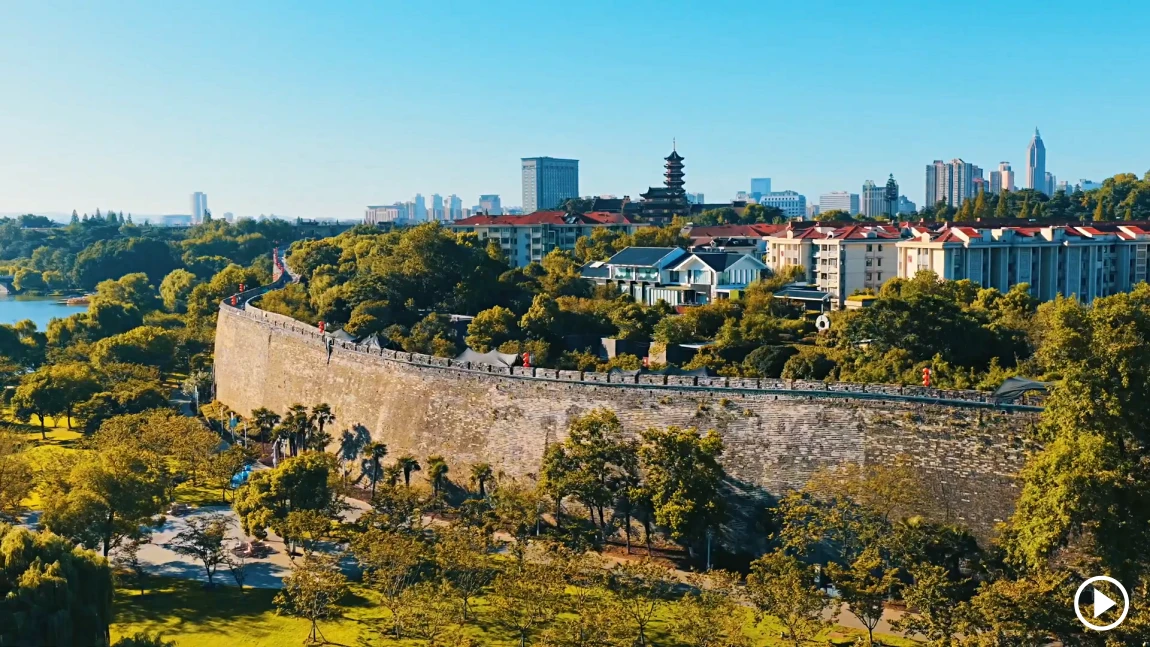
Watch: 南京明城墙最美一段 玄武门-解放门段
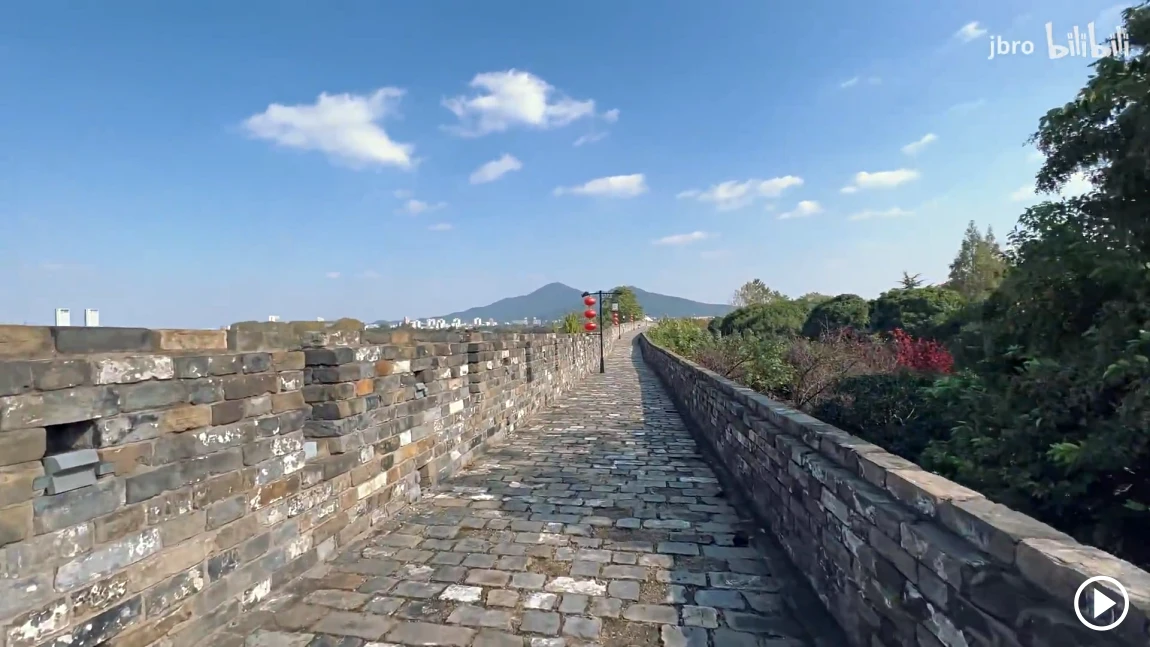
Watch: 南京 明城墙 解放门位置上方 俯瞰玄武湖etc
Optional: Xuanwu Lake
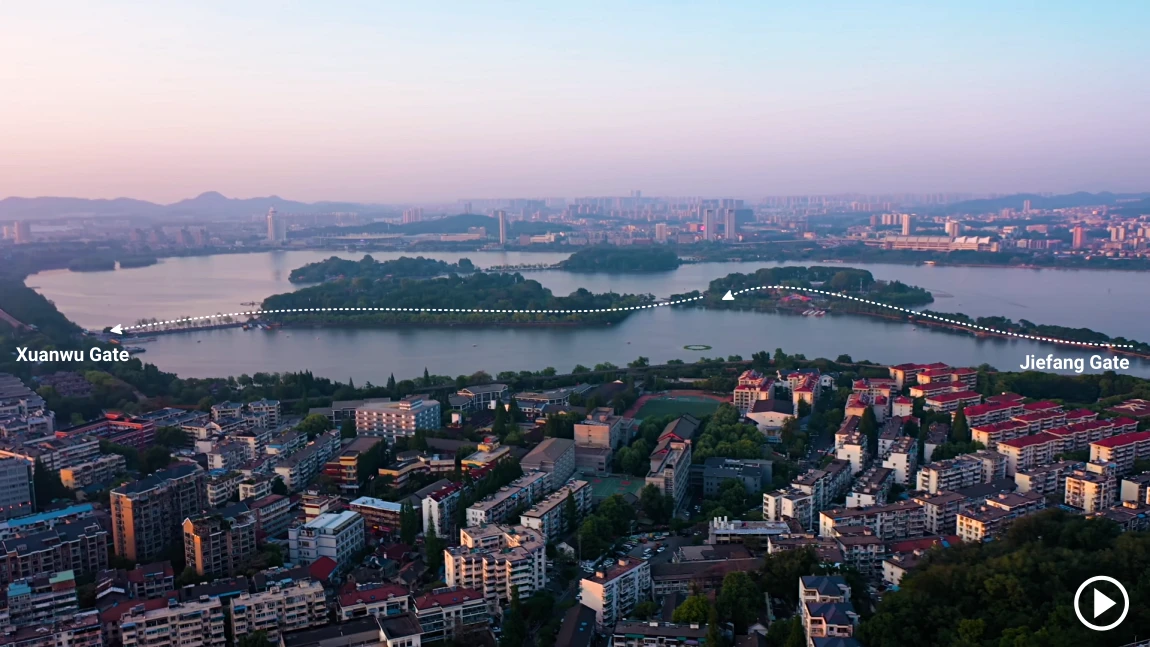
If you have plenty of time, after leaving the wall at Jiefang Gate, you can continue across the causeways and islands of Xuanwu Lake and eventually walk back toward Xuanwu Gate. The route is about 2 km (1.2 miles) and takes around 1–1.5 hours. However, I wouldn’t consider it a must-see. The scenery is fairly ordinary, and the area is mainly a green space used by local residents for walking and recreation. In the evening, it can also get quite noisy, as many older residents come here to sing and socialize.
Watch: 航拍 南京玄武湖
Nanjing Massacre Memorial Hall
Official name: The Memorial Hall of the Victims in Nanjing Massacre by Japanese Invaders
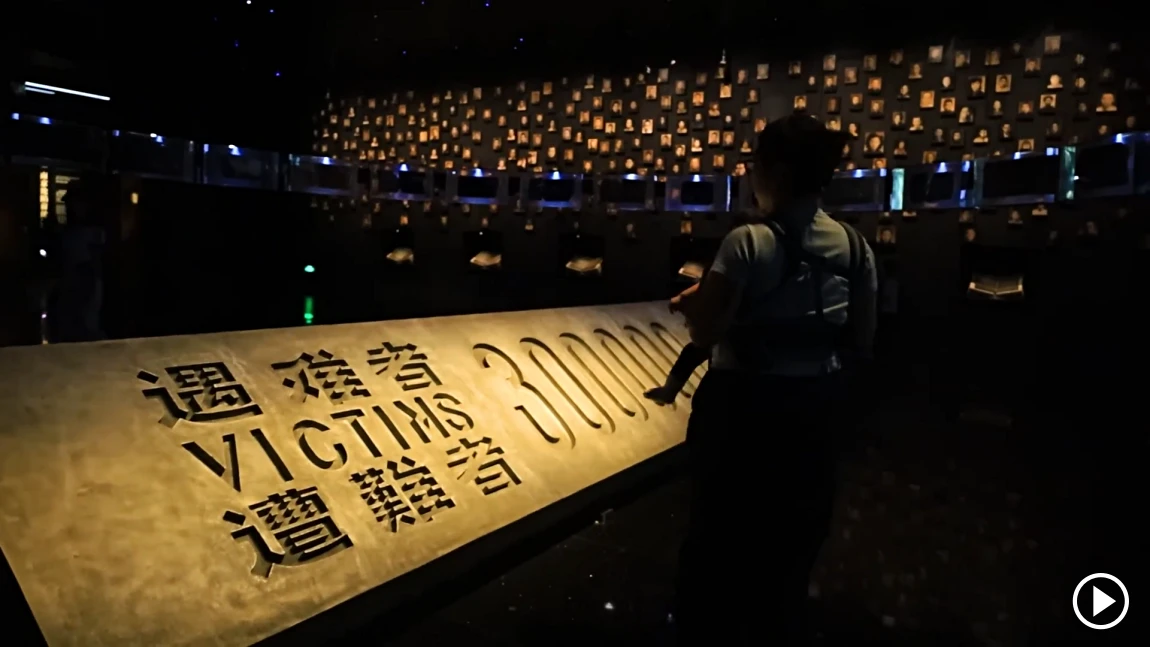
Built in 1985, the Nanjing Massacre Memorial Hall commemorates one of the most horrific mass killings of civilians in the Asian theater during World War II. Like Auschwitz, it stands as a reminder of one of the darkest chapters in human history.
What Makes the Museum Significant:
- The memorial commemorates the approximately 300,000 victims of the Nanjing Massacre.
- The museum was built directly over the site of one of the mass burial pits from the massacre. Human remains excavated from the site are displayed at the museum, with visible evidence of injuries caused by blades and gunfire.
- The exhibits are organized around five themes: Atrocities, Resistance, Trials, Victory, and Peace. They include personal belongings of victims, secretly filmed footage taken by foreign journalists and missionaries, recorded testimonies from survivors, and wartime diaries in which Japanese soldiers expressed remorse for their actions.
Opening hours: 8:30 am–5:00 pm (closed on Mondays)
Admission: Free. International visitors do not need to make an advance online reservation. Simply present your passport and use the manual entry lane at the entrance.
Recommended visit time: About 1–2 hours
Key Factors Behind the Massacre:
There were several contributing factors. Two particularly important ones were:
- Japanese militarism and extreme nationalism: During World War II, Japanese soldiers were exposed to intense militarist and nationalist indoctrination. They were taught that Japan was a divine nation destined to rule over other peoples, while the Emperor’s commands were treated as sacred and absolute. Obedience was regarded as the highest virtue. Soldiers were trained to focus on whether they had carried out an order, rather than questioning whether the order itself was right or wrong.
- The failure of Japan’s initial strategy in China: Japan had originally hoped for a quick victory and did not want to become bogged down in a prolonged war in China, especially because the Soviet Union was regarded as Japan’s primary potential military rival. However, the early campaign in China did not go as planned. Japan’s military leadership subsequently decided to capture Nanjing, then China’s capital, and use the city’s destruction and the mass killing of civilians to create terror, undermine Chinese resistance, and pressure the Chinese government into surrendering as quickly as possible.
Watch: Why Nanjing is the most SHOCKING city in China
Laomendong (Laomen East)
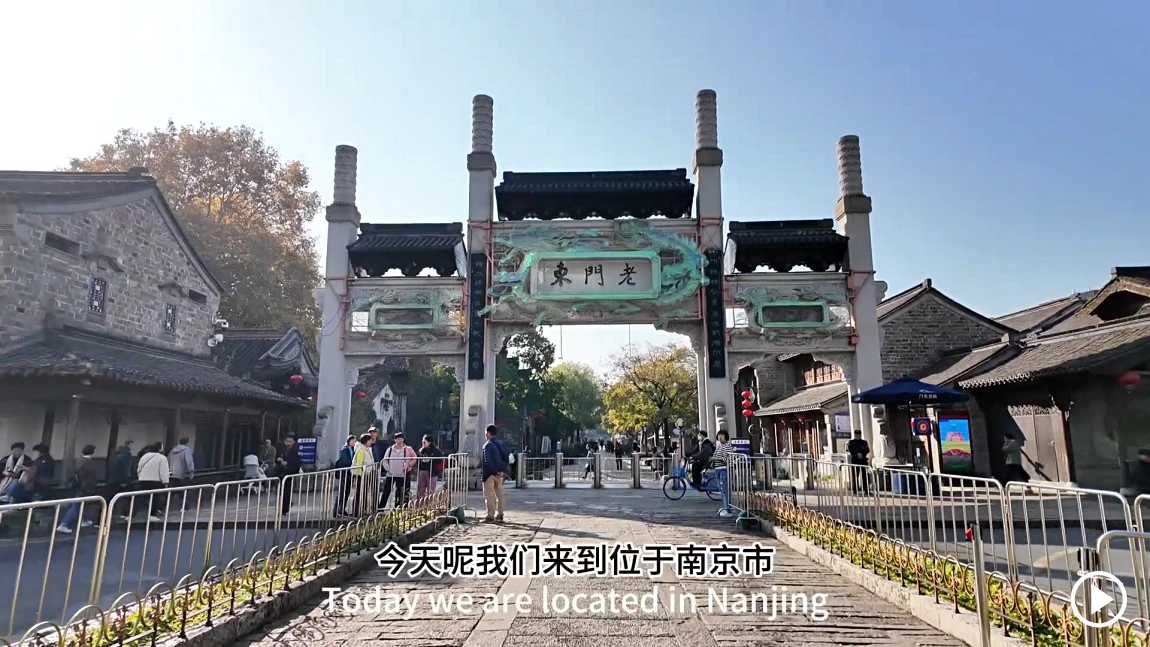
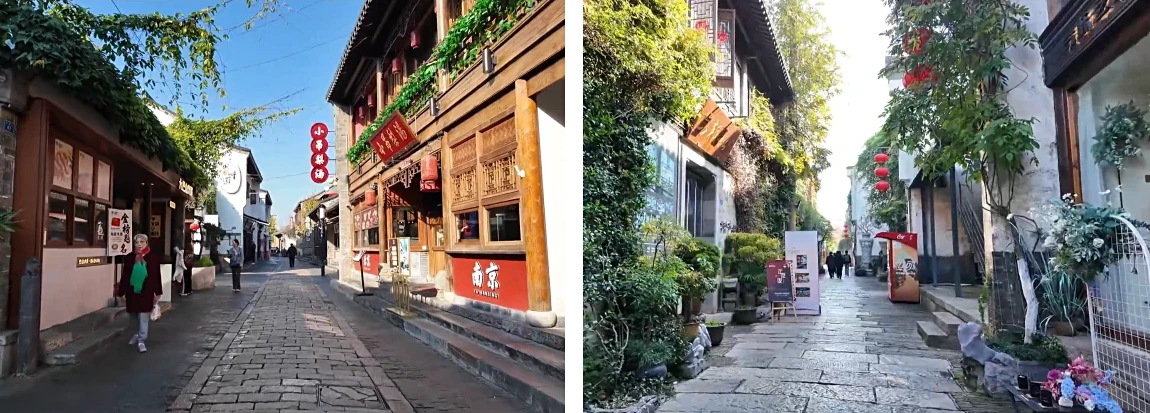
Laomendong is a commercial district built around and adapted from historic buildings dating back to the Ming Dynasty. You can think of it as a main pedestrian street surrounded by a network of smaller alleys, filled with local restaurants, shops, and creative boutiques.
Opening hours: 24 hours (most shops operate from 10:00 am to 10:00 pm)
Recommended visit time: 1–2 hours
How to Visit:
- The main street is relatively short and tends to get crowded. I recommend exploring the smaller side alleys rather than just walking down the main street.
- Mornings are quieter and better for photography. Evenings are the busiest, but the area looks particularly charming after dark.
- If you want to try local Nanjing cuisine, search for “小厨娘书香金陵 (夫子庙老门东店)” on your map app. This is a well-established local chain serving home-style dishes. Prices are reasonable and the food quality is consistently good—the only downside is that you may need to wait for a table.
Getting There:
- Metro: Take Line 3 to Wudingmen Station (Exit 2), then walk about 10 minutes.
- Ride-hailing: On weekdays, set “Laomen East (North Gate) 老门东(北门)” as your destination. During summer and public holidays, traffic can become congested from around noon, and temporary traffic restrictions may prevent cars from stopping nearby. In that case, set your destination to Wudingmen Metro Station or “Da Bao’en Temple Heritage and Scenic Area 大报恩寺遗址景区” and walk to Laomendong from there.
Watch: 南京老门东 Lao Men Dong ,Nanjing
Nearby Attractions: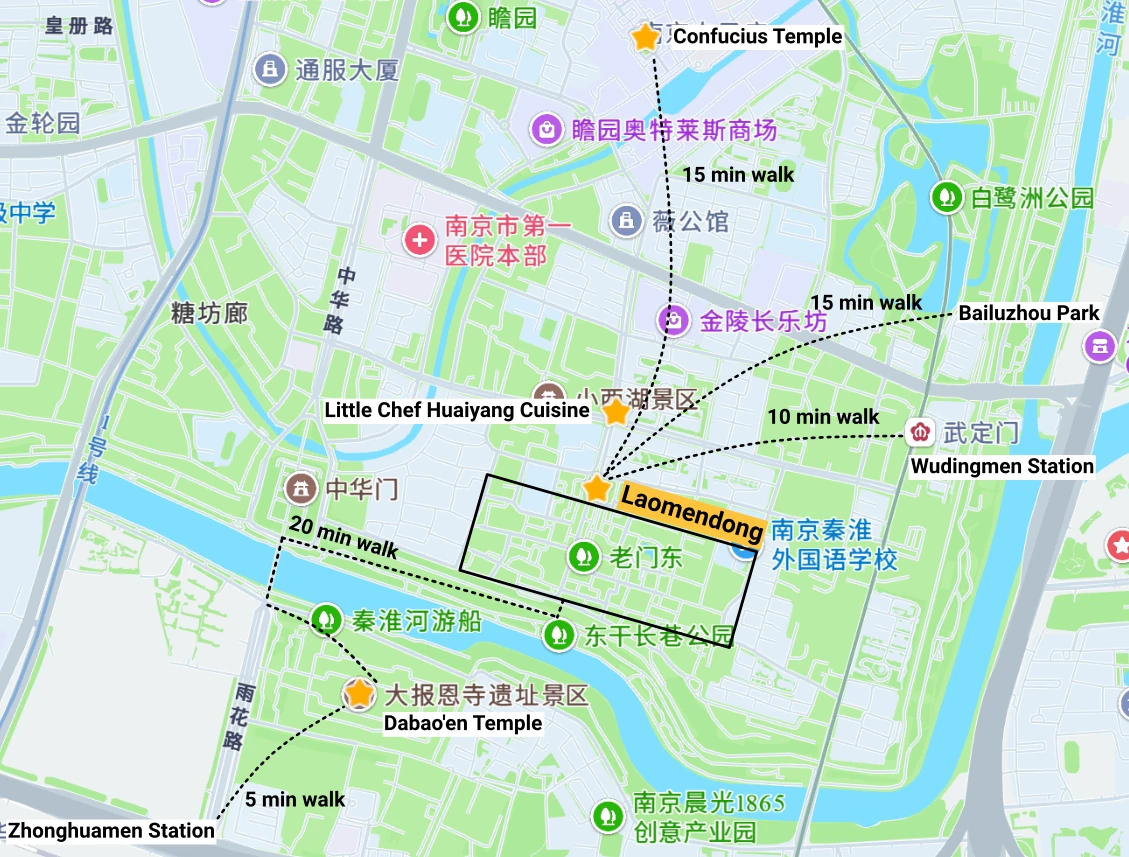
1. Da Bao’en Temple Heritage Museum
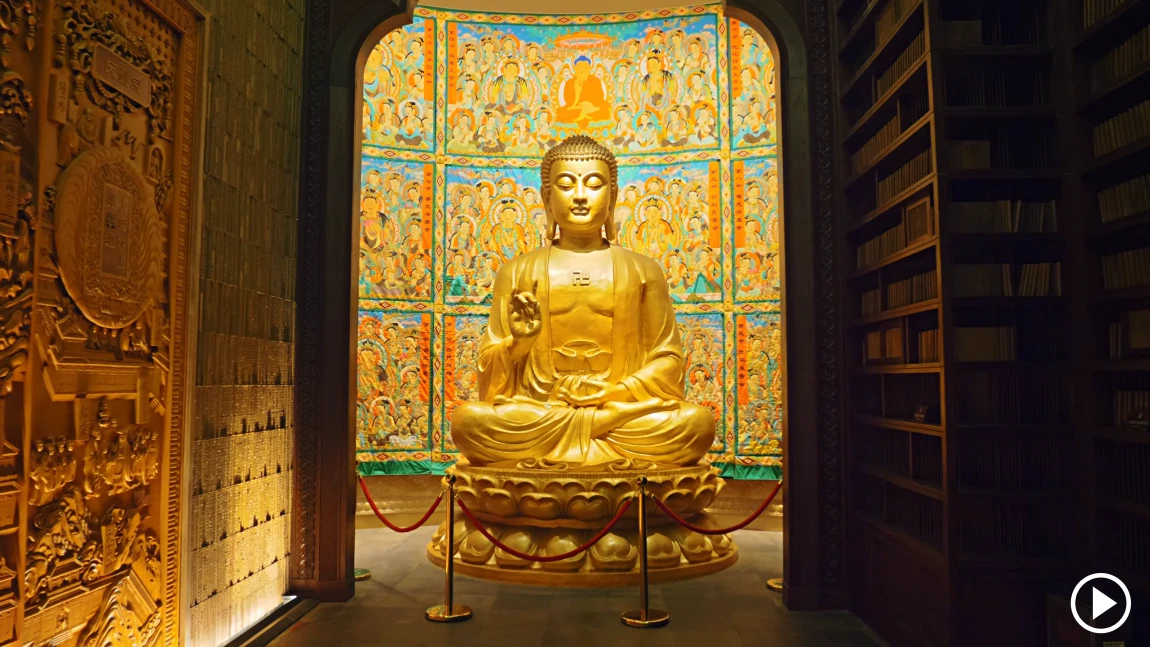
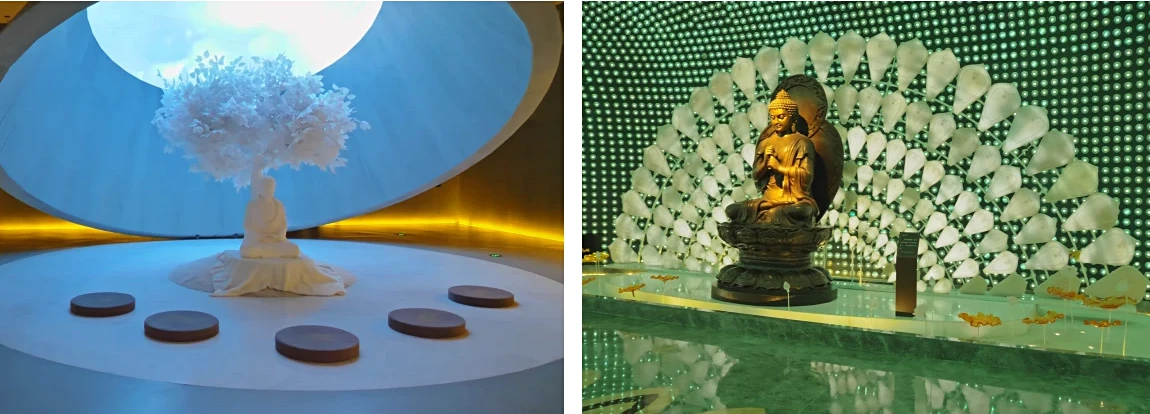
If you have extra time, consider visiting the Da Bao’en Temple Heritage Museum before going to Laomendong. The original temple was built in 247 AD but was completely destroyed during a war in 1856. In 2015, the current museum was built on the original site. It houses a large collection of artifacts and uses modern tech to recreate iconic Buddhist scenes. The museum gets generally positive reviews, though some visitors find the ticket price a bit steep. If you don’t have time to visit Niushou Mountain, this is a solid alternative for experiencing Buddhist culture through modern architecture and interactive displays.
Opening hours: 8:30 am–8:00 pm (the tower closes at 5:00 or 6:00 pm depending on the season; tower lights turn on around 7:30 pm)
Ticket: ¥90 (can be booked on Trip.com)
Recommended visit time: About 1.5 hours
Watch: Walking In The Grand Baoen Temple Heritage and Scenic Area
2. Bailuzhou Park Lantern Festival
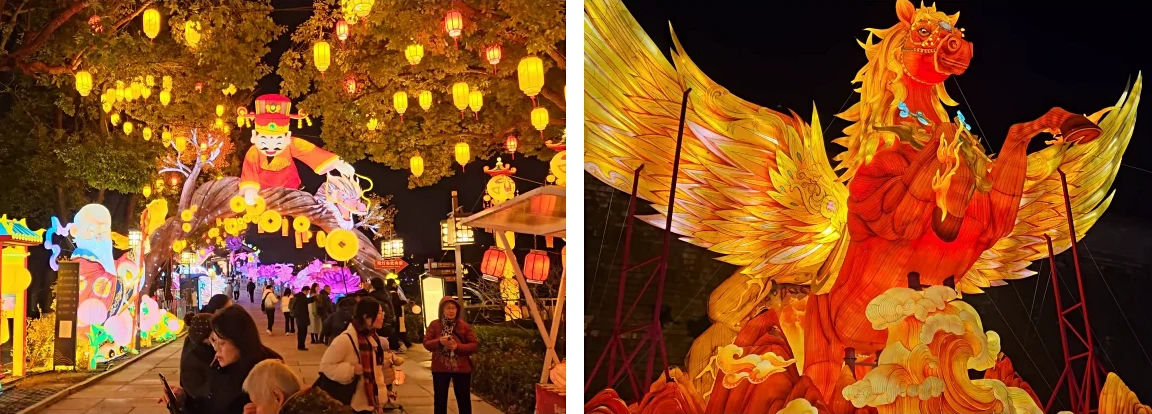
If you’re visiting between late December and early May, I recommend walking about 15 minutes northeast from Laomendong after dinner to Bailuzhou Park to see Nanjing’s famous lantern festival. Nanjing has a long tradition of hosting large-scale lantern festivals during winter, with Bailuzhou Park as one of the primary venues.
Ticket: ¥80 (available at the entrance)
Illumination hours: 5:00 pm–10:00 pm
Recommended visit time: 1–1.5 hours (features around 50 large light displays)
Things to Know:
- The experience is much better if you avoid weekends and public holidays.
- There are two ticket types: a ¥40 daytime ticket and an ¥80 evening ticket. The daytime ticket does not allow you to stay after the evening lights turn on, so make sure to buy the evening ticket.
- The park has a South Gate and a West Gate. On regular days, you can enter and exit through either gate. On public holidays, visitors must enter through the West Gate and exit through the South Gate (the two gates are about 800 meters apart).
- Ride-hailing cars can be difficult to get after the festival. I recommend taking the metro from Wudingmen Station, right next to the South Gate.
Watch: The Grandest Chinese New Year Lantern Festival 2026

3. Confucius Temple Area (Fuzimiao)
Another popular attraction nearby is the Confucius Temple area. However, the streets are narrow and can get overwhelming with crowds.
There are three main components here:
- Confucius Temple & Imperial Examination Museum: Tickets cost ¥30 and ¥50 respectively. If you aren’t familiar with China’s ancient civil service examination system, you might find them less engaging.
- Commercial Street: Heavily commercialized with repetitive souvenir shops; in my opinion, it feels much less authentic than Laomendong.
- Qinhuai River Cruise: Reviews are mixed. Since the boats run on electric or diesel motors and lines can be long, I suggest skipping it. If you want a traditional Chinese boat experience, the hand-rowed boats in Shanghai, Suzhou, or Hangzhou are much better.
Overall, I don’t recommend visiting between 7:00 pm and 10:00 pm, when peak crowds hit. However, if you’ve already visited Bailuzhou Park for the lantern festival, walking over around 10:00 pm is a nice option. By then, the crowds have dropped significantly, making for a pleasant late-night stroll. Most shops close around 10:30 pm, but the decorative lights usually stay on until 11:00 pm.
Niushou Mountain Cultural Tourism Zone
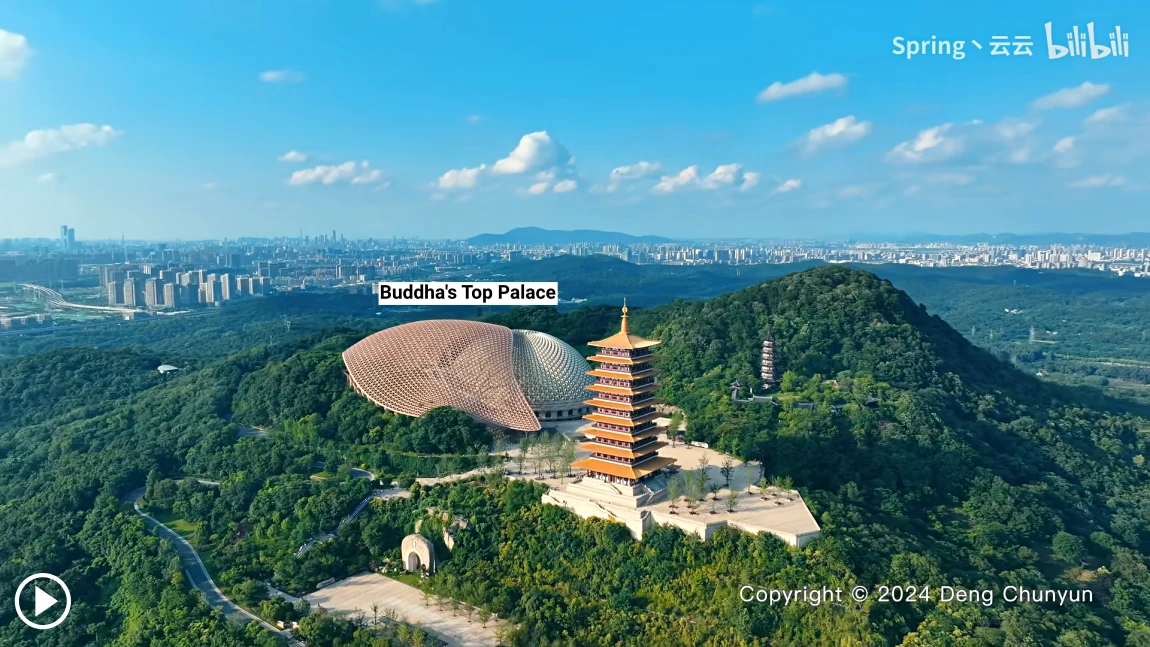
Niushou Mountain is not particularly high, with an elevation of just 243 meters (797 feet). At the summit is one of Nanjing’s best-known Buddhist cultural attractions.
Highlights
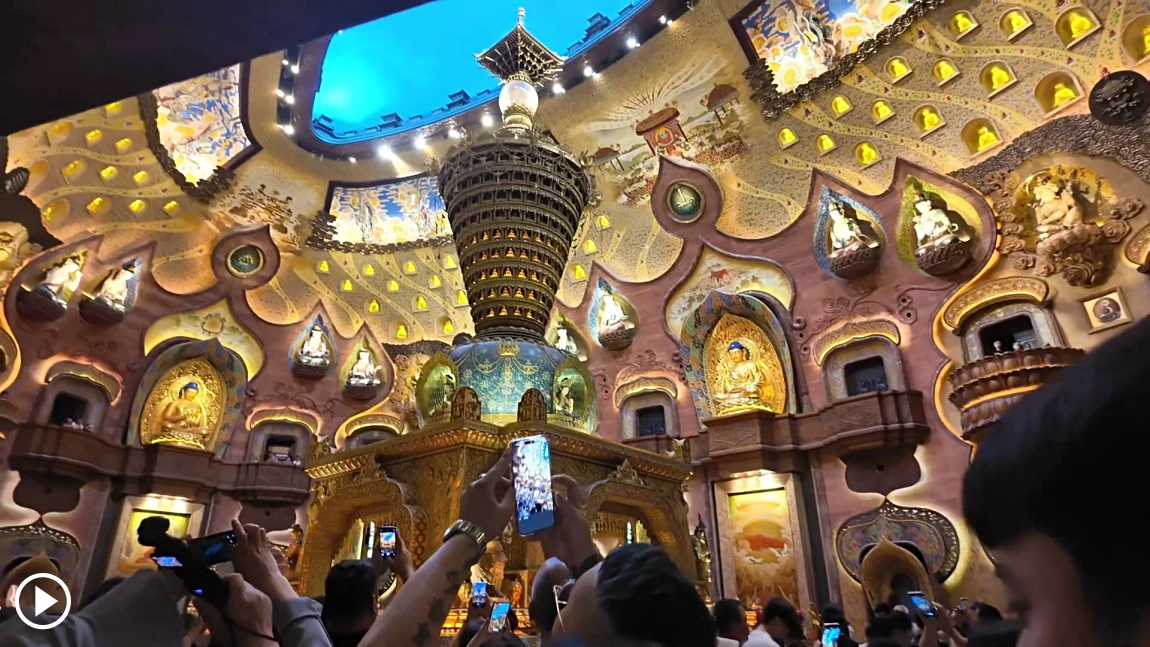
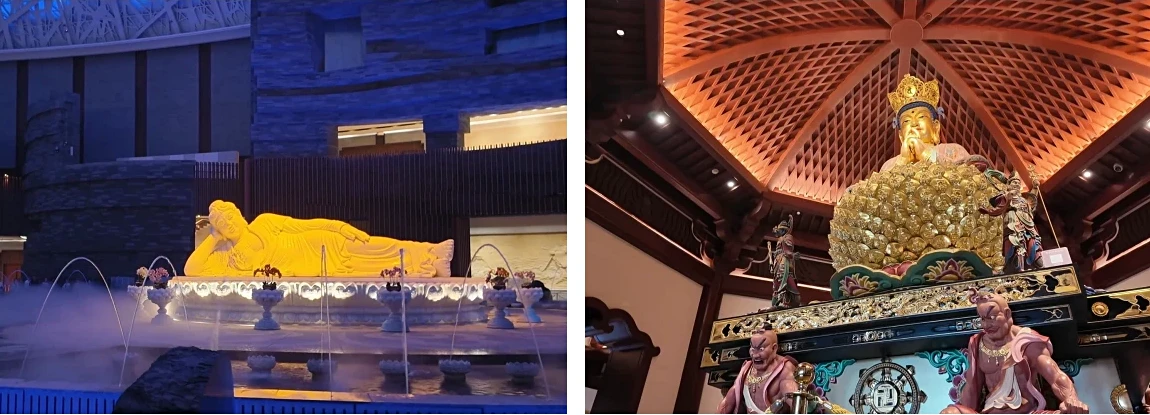
- Foding Palace is the main attraction. Its exterior is shaped like a giant lotus flower, although locals jokingly refer to it as the “Big Durian.” The above-ground level features a 7.5-meter-long reclining Buddha and a huge dome with a distinctly Zen-inspired design. The building also extends six floors underground, where you can see the spectacular Thousand Buddha Hall and the Reliquary Palace. The latter houses what is believed to be the world’s only sacred skull bone relic (parietal bone relic) of Shakyamuni Buddha, though this specific area is only open to the public on designated holidays.
- Next to Foding Palace stands an 88-meter-tall (289 feet), nine-story Buddhist pagoda. From the top, you can enjoy panoramic views across the entire scenic area.
Important: Niushou Mountain’s architecture is visually spectacular, but this is not a traditional temple complex. If you’re primarily interested in ancient temples, historical architecture, or a strong sense of antiquity, this may not be the right attraction for you.
Opening hours: 8:30 am–5:30 pm
Ticket: ¥160 (can be booked on Trip.com)
Recommended visit time: About 3 hours
Getting There:
Niushou Mountain is about 20 km (12 miles) from the city center of Nanjing, taking around 40 minutes to 1 hour by car, depending on traffic.
Ride-hailing: Set your destination to “Niushou Mountain Cultural Tourism Zone – West Gate Ticket Office 南京牛首山文化旅游区西门售票处 ” After entering through the gate, you can walk about 1.5 km (0.9 miles) uphill to Foding Palace (around 25 minutes). Alternatively, you can pay ¥10 for the sightseeing shuttle bus, which takes about 5 minutes.
Note: There is also an East Gate, but it is primarily used by tour groups and usually has much longer lines.
Watch: 我拍到了南京版的天上宫阙——牛首山
Watch: We went to the Niushou Mountain in Nanjing
Thank you for reading. Hope you have a wonderful journey! ヽ(´▽`)/